




Solemnity of Saint Tecla
“Rito del “faro” Ceremony and Chapter Eucharist on the Solemnity of Saint Thecla, Patroness of the Cathedral Parish
11 a.m. – 12:30 p.m.
You can watch the celebration via livestream on this website (www.duomomilano.it) on the Duomo Milano TV YouTube channel
The veneration of the Virgin Tecla, who did not hesitate to shed her blood for Christ the Lord, has been attested since the end of the second century. Many churches were built in her honor; the ancient Cathedral of Milan was dedicated to her.
Bishop Ambrose repeatedly held up Thecla as a model of faith and steadfast perseverance in the love of the Savior for consecrated virgins. The name of this martyr has been included since ancient times in the Eucharistic Canon specific to the Milanese liturgy.
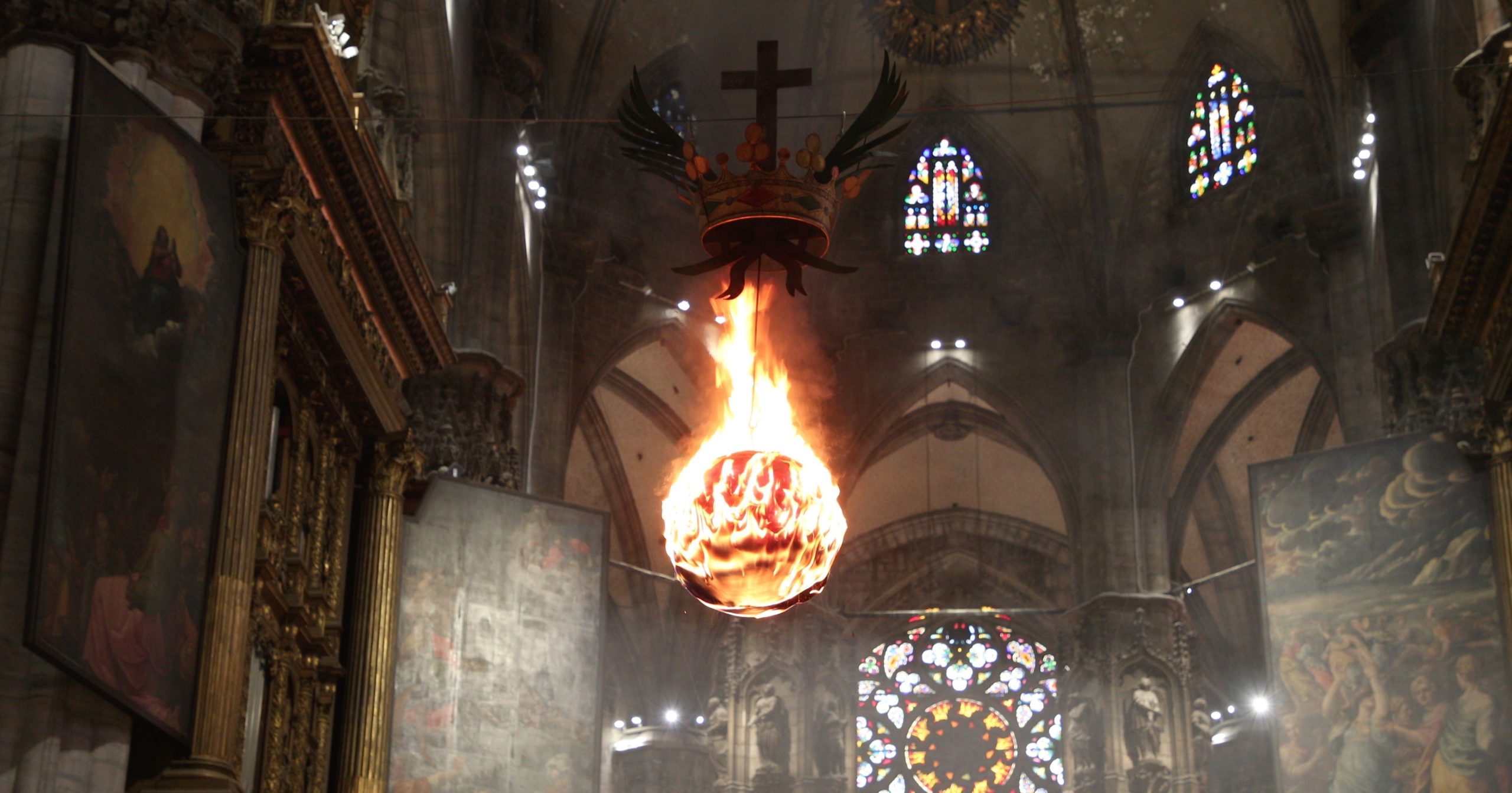
In the Cathedral, at the beginning of the Chapter Mass on the Solemnity of Saint Tecla, the patron saint of the Cathedral Parish (this year on September 27), one of the most evocative rites of the Ambrosian liturgy takes place: the rite of the beacon.
This custom certainly derives from an older tradition, likely dating back to the 7th century, and, in the Milanese context—specifically in relation to the Cathedral’s liturgy—at least to the 12th century.
The rite marked certain particularly important celebrations; once the entrance procession had reached the altar, the so-called “pharus” was lit—a sort of chandelier consisting of a series of lamps arranged in a circle, atop which a ring of cotton wool had been placed; as it burned, it transferred the flame to the individual lamps.
Scholars’ interpretations of this ancient rite range from a purely functional explanation (the rapid, nearly simultaneous lighting of the lamps) to an allegorical one (a symbol of the triumph and glory of the Martyrs, on whose feast days this rite was celebrated), to the view that the lighting of the pharus simply served to make the beginning of the liturgical celebration particularly solemn on special days.
Over time, the lantern evolved from a wreath of lamps to a cotton ball suspended at the entrance to the presbytery, which the celebrant himself sets alight with three lit candles attached to the top of a pole at the end of the initial procession and the traditional singing of the 12 Kýrie eléison, before ascending to the altar. In this case, the meaning of the rite alludes to the martyr’s sacrifice of his life.