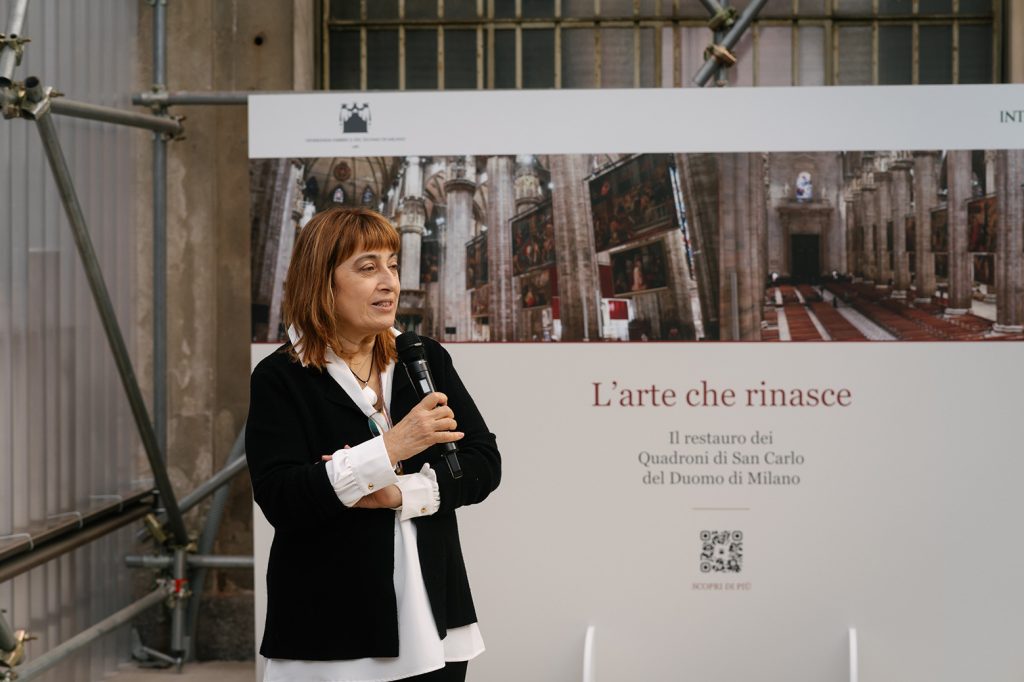




A new chapter for the monumental cycle, with the support of Intesa Sanpaolo
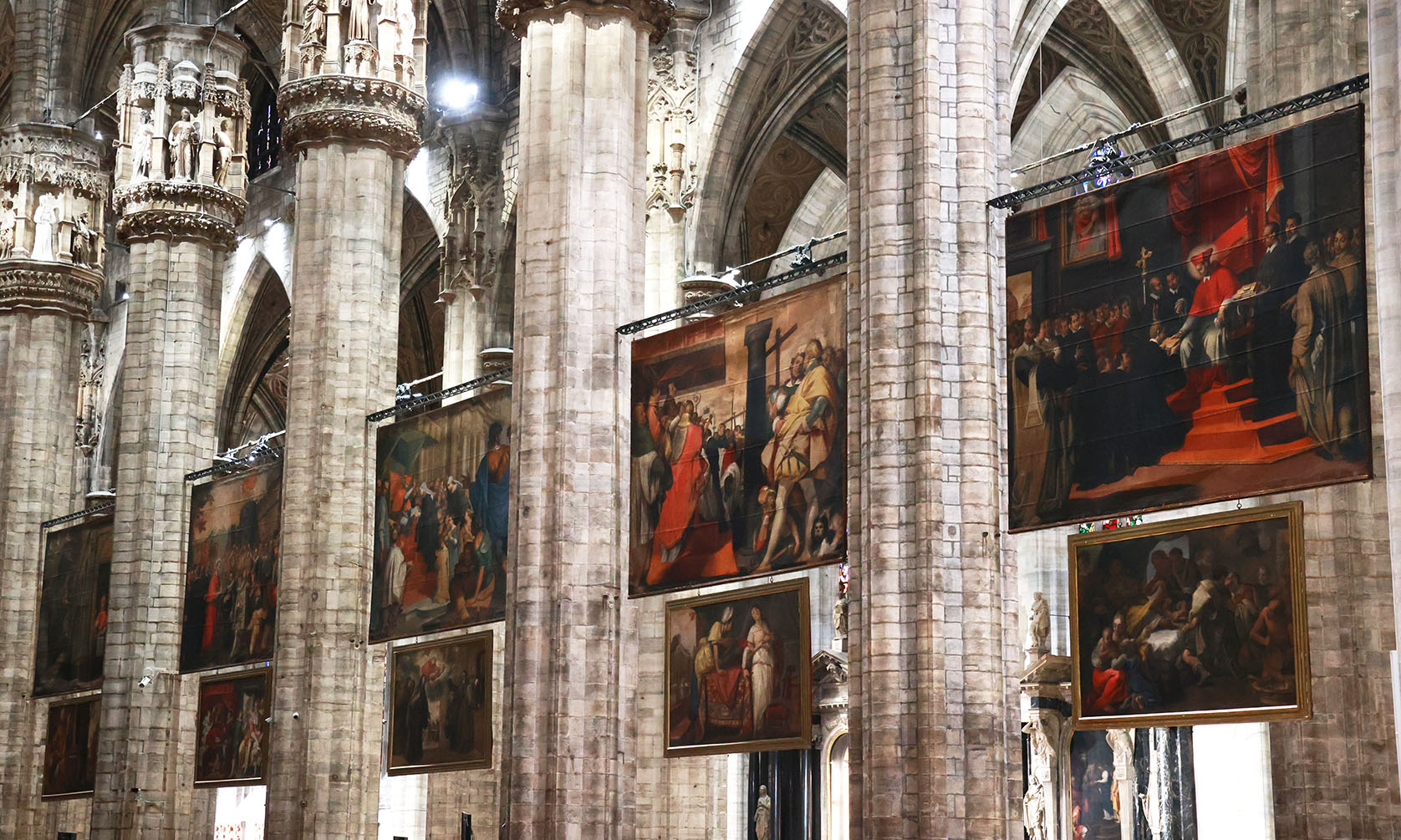
The “Life of St. Charles” cycle represents one of the most ambitious artistic undertakings promoted by the Veneranda Fabbrica del Duomo and dates back to the early 17th century, a time of growing devotion to the Archbishop of Milan.
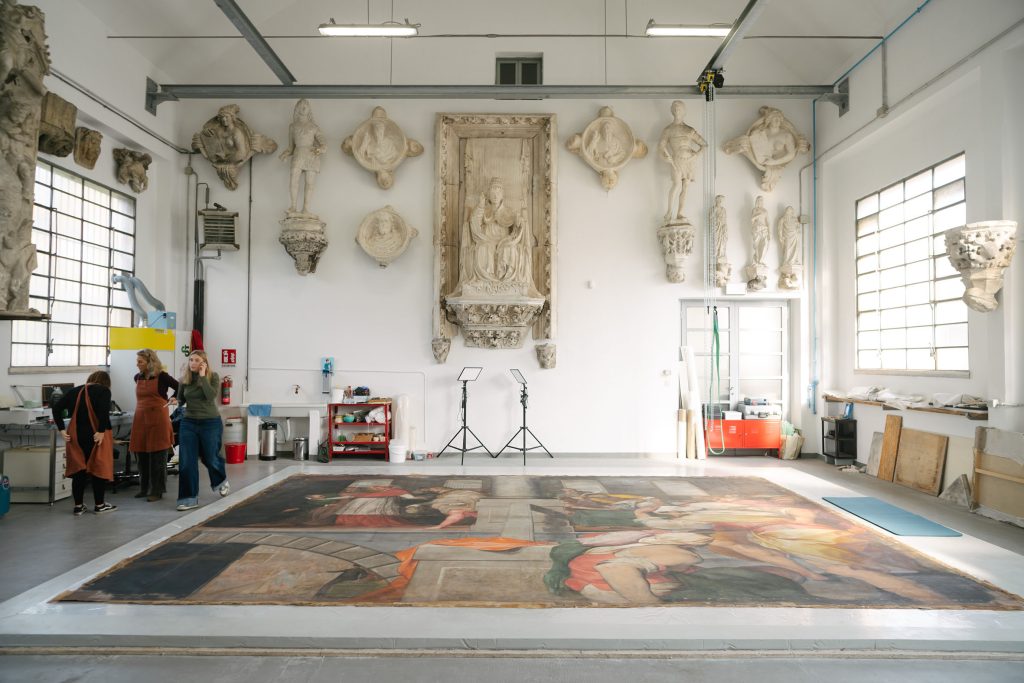
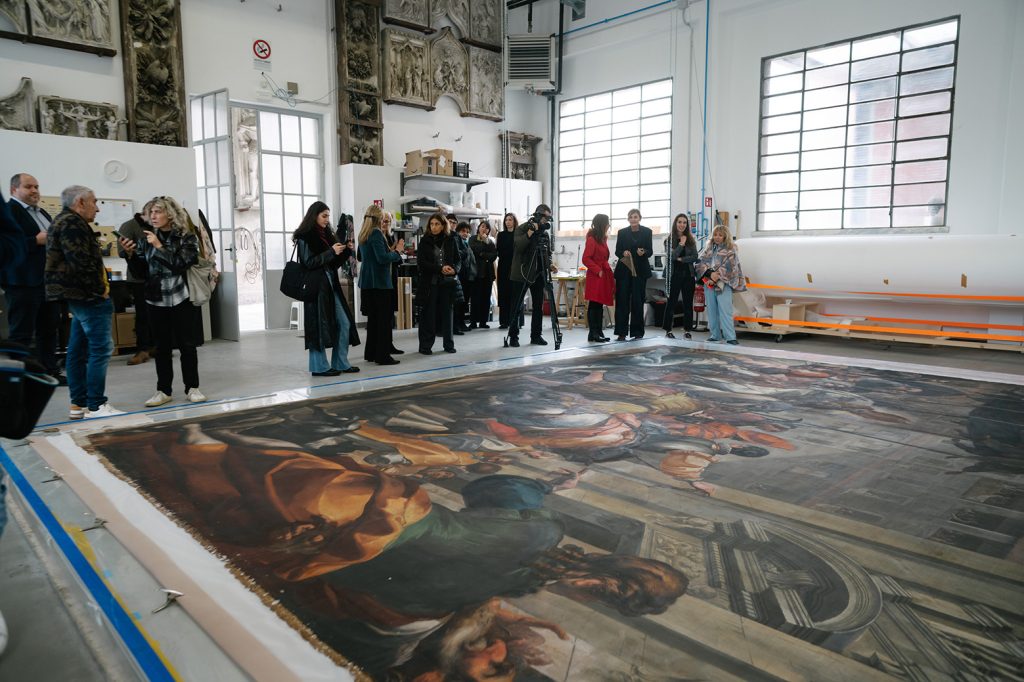
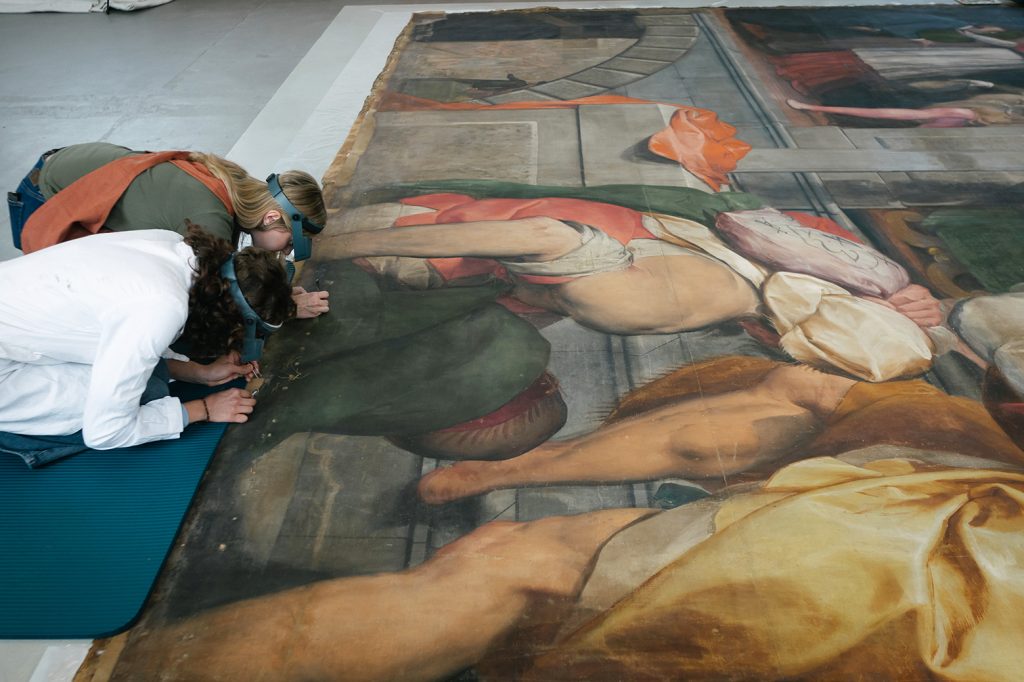
It currently consists of 26 monumental tempera paintings on canvas, each measuring 600 x 475 centimeters, and is on display every year from November 4—the Feast of St. Charles Borromeo—until Epiphany.
The first twenty works were created between 1602 and 1604, while the remaining ones were added between the late 17th century and 1694, completing the narrative of the saint’s life.
Taken as a whole, the Quadroni, the monumental cycle, constitute a unique phenomenon in the European art scene, featuring the leading figures of Lombard painting of the time—including Cerano, Duchino, Fiammenghino, Carlo Buzzi, and Carlo Antonio Procaccini— Together, they created a cycle that remains an indispensable source of knowledge about the spirituality, art, and culture of Borromean Milan to this day.
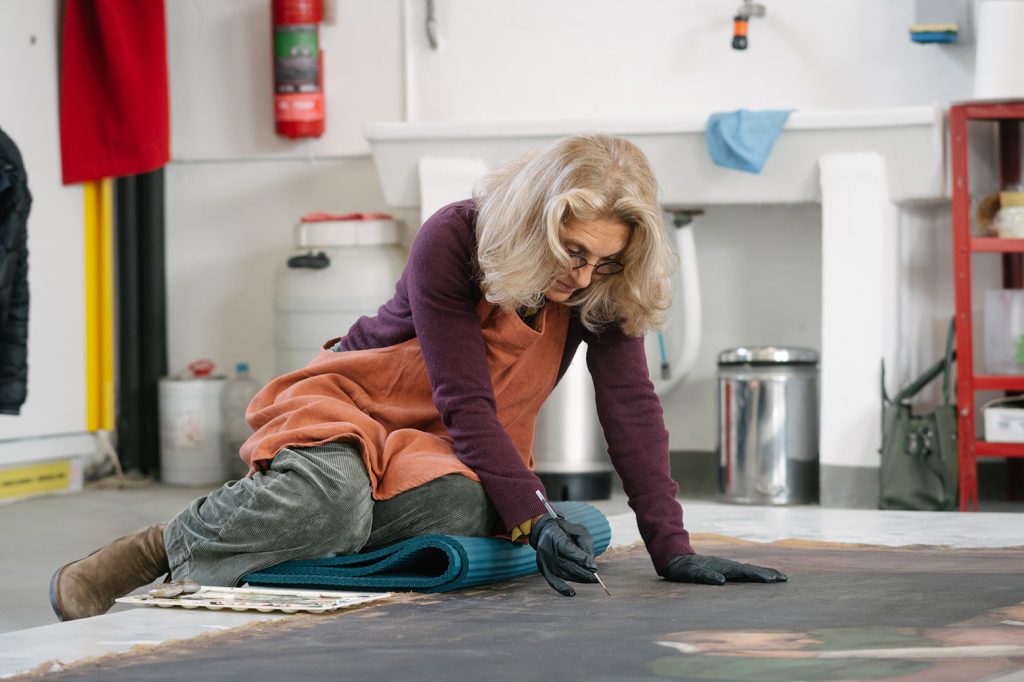
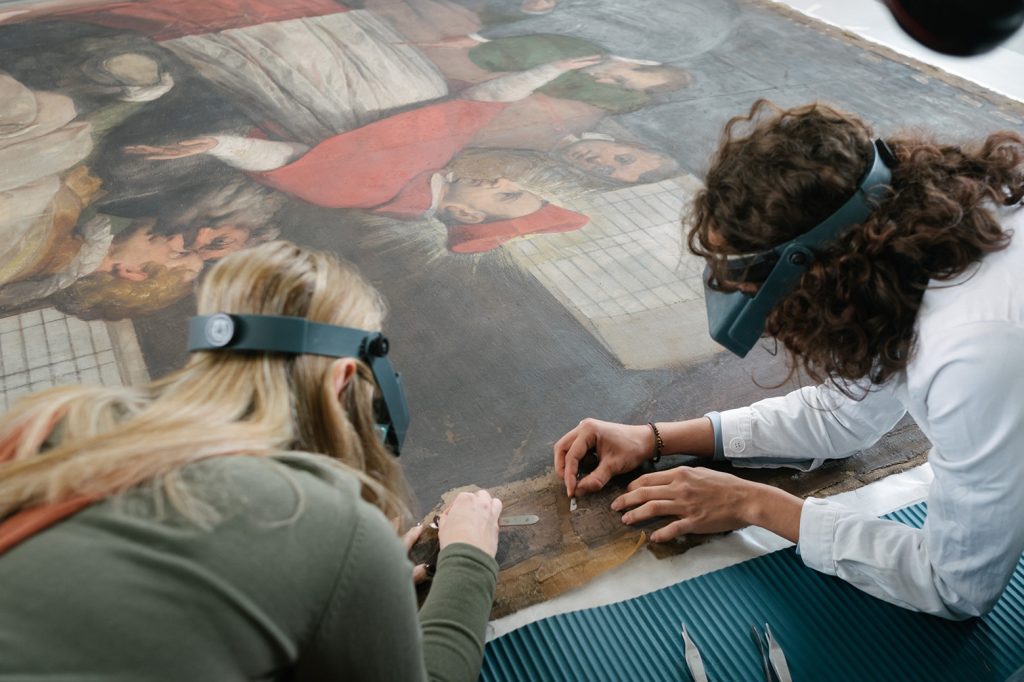
Thus begins an ambitious and complex restoration project, born of the urgent need to address the signs of deterioration that have emerged and become increasingly evident over the years. The decision by the Veneranda Fabbrica del Duomo to undertake a unified approach to the large canvases led to the development of a coordinated and shared restoration project, capable of bringing together diverse areas of expertise and ensuring a consistent approach throughout the entire process.
The restoration project
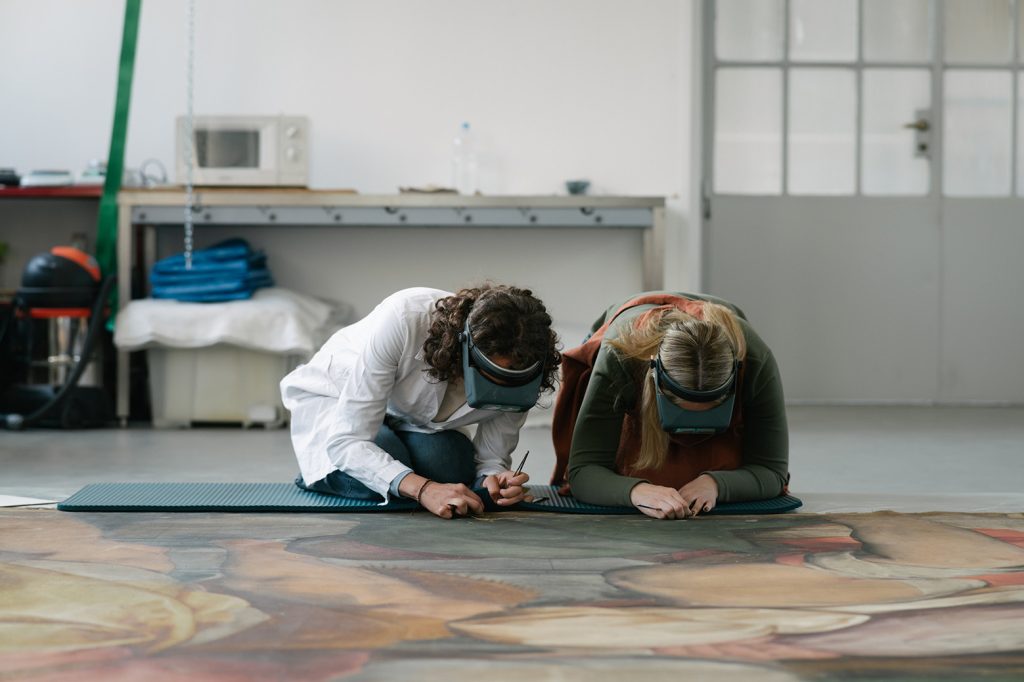
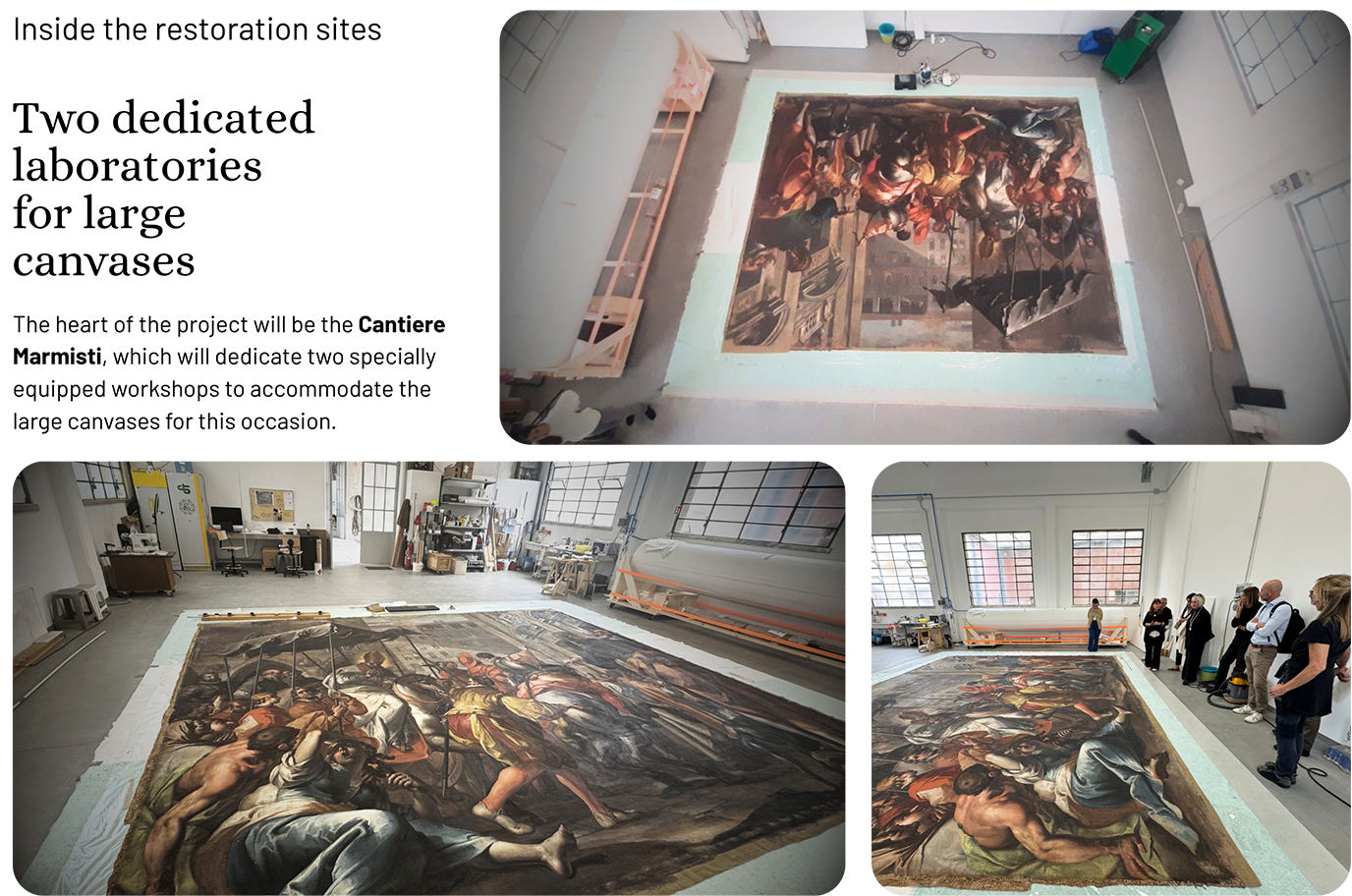
The restoration project began after approximately two years of preliminary studies and analyses of the state of conservation of the entire cycle. In addition to the restoration of the painted surface, the current frames will be replaced with new spring-loaded aluminum frames, designed to accommodate and control the movements of the large canvases and make the delicate operations of handling, storage, and hanging safer.
As part of this initiative, the Veneranda Fabbrica would like to extend special thanks to Extris, the project’s technical partner, for supplying high-performance fabrics that were tested during the development of the new system for securing the canvases to the frames.
Every phase of the project was coordinated with the Superintendence for Archaeology, Fine Arts, and Landscape of Milan. The project, drafted by restorer Roberta Grazioli — who was appointed to oversee the work—was preliminarily approved by the Superintendence in its main outlines.
The extraordinary complexity of the project—which is expected to take about six years to complete, with a total estimated investment of around 3 million euros—made it necessary to involve Chiappa e Didonè Restauri made up of Gabriele Chiappa, Alessandra Didonè, Cristian Tortato, Linda Bresciani, Monica Abeni, Paola Guerra ed Elisa Buccio, and Anna Lucchini Restauri S.r.l. in ATI with Lorenzo Conti, in collaboration with Sara Silva, Paolo Cantalupi, Francesca Pozzi, Dumitrita Petrovici, Giorgia Longagnani.
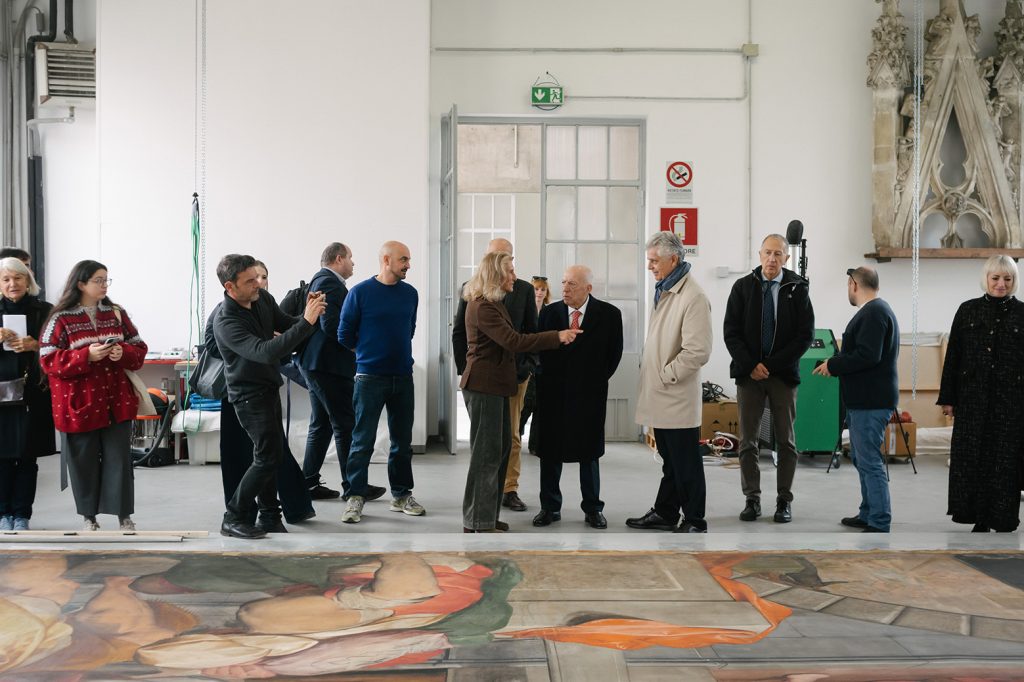
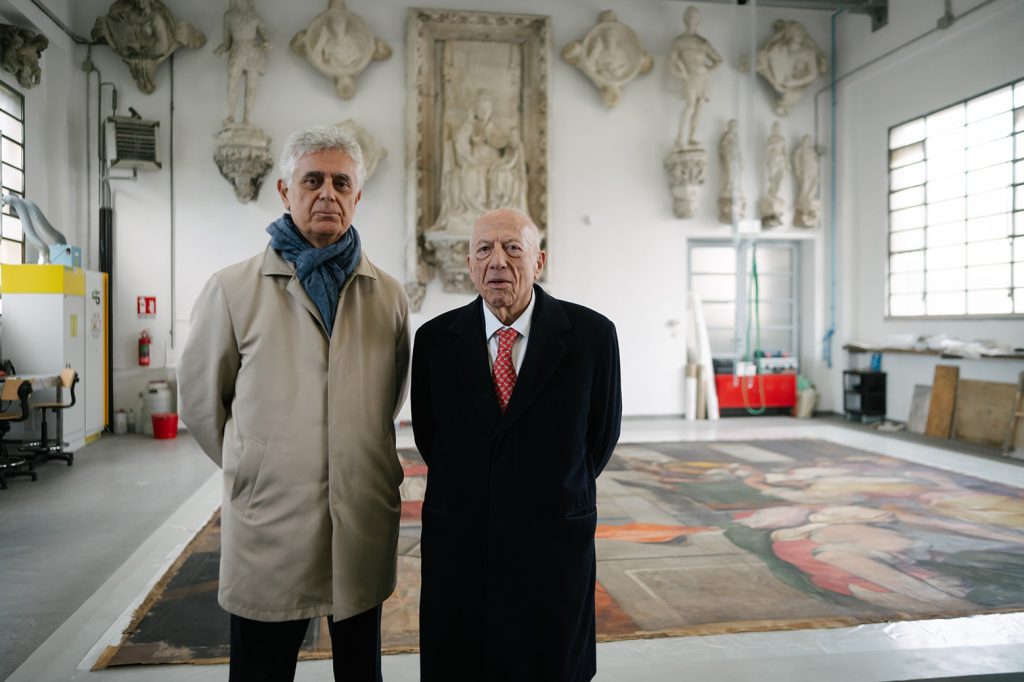
During the conservation work, the artworks will be progressively moved to the restoration laboratories at the Cantiere Marmisti and thus temporarily removed from the traditional annual exhibition in the Cathedral. The restored canvases will gradually return to the Cathedral as the various phases of the project are completed.
The ultimate goal is to restore the entire cycle to full legibility and a unified view of the entire cycle, ensuring its preservation and passing on a heritage of extraordinary value to future generations.
Thanks to