



 04 November
 Facade spire-G1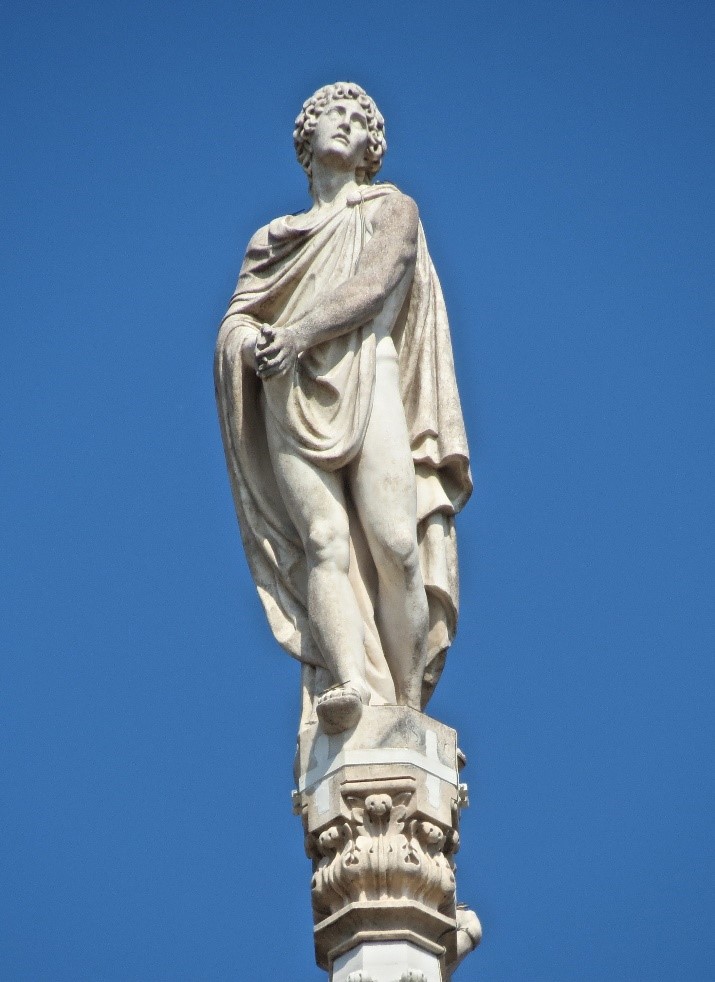
Etymology:
Agricola derives from the Latin agricola, composed of ager (“field”) and colĕre (“to cultivate”). Literally meaning “one who works the field” it conveys a sense of connection to the land and nature.
At the roots of the Church of Bologna (Italy) there are two saints, considered protomartyrs there. Vitale and Agricola, servant and master respectively, were Christian citizens of Bologna who, despite their difference in social status, remained united in martyrdom thanks to their faith. We don’t know very much about their lives; what is certain is that through their witness they conveyed a message of equality and solidarity, which received public recognition only in 392 A.D. when the Bishop of Bologna, Eusebius, announced the discovery of their remains in a Jewish cemetery in today’s capital of Emilia Romagna region. He gave them a new burial according to Christian rite, an event in which St. Ambrose attended. The cult of the two martyrs spread throughout the West thanks to St. Ambrose influence, even if the cult kept its main focus in the Emilian city, where a basilica was specifically built to house their relics, later moved to a nearby chapel.
The history of the statue in the Duomo’s construction site:
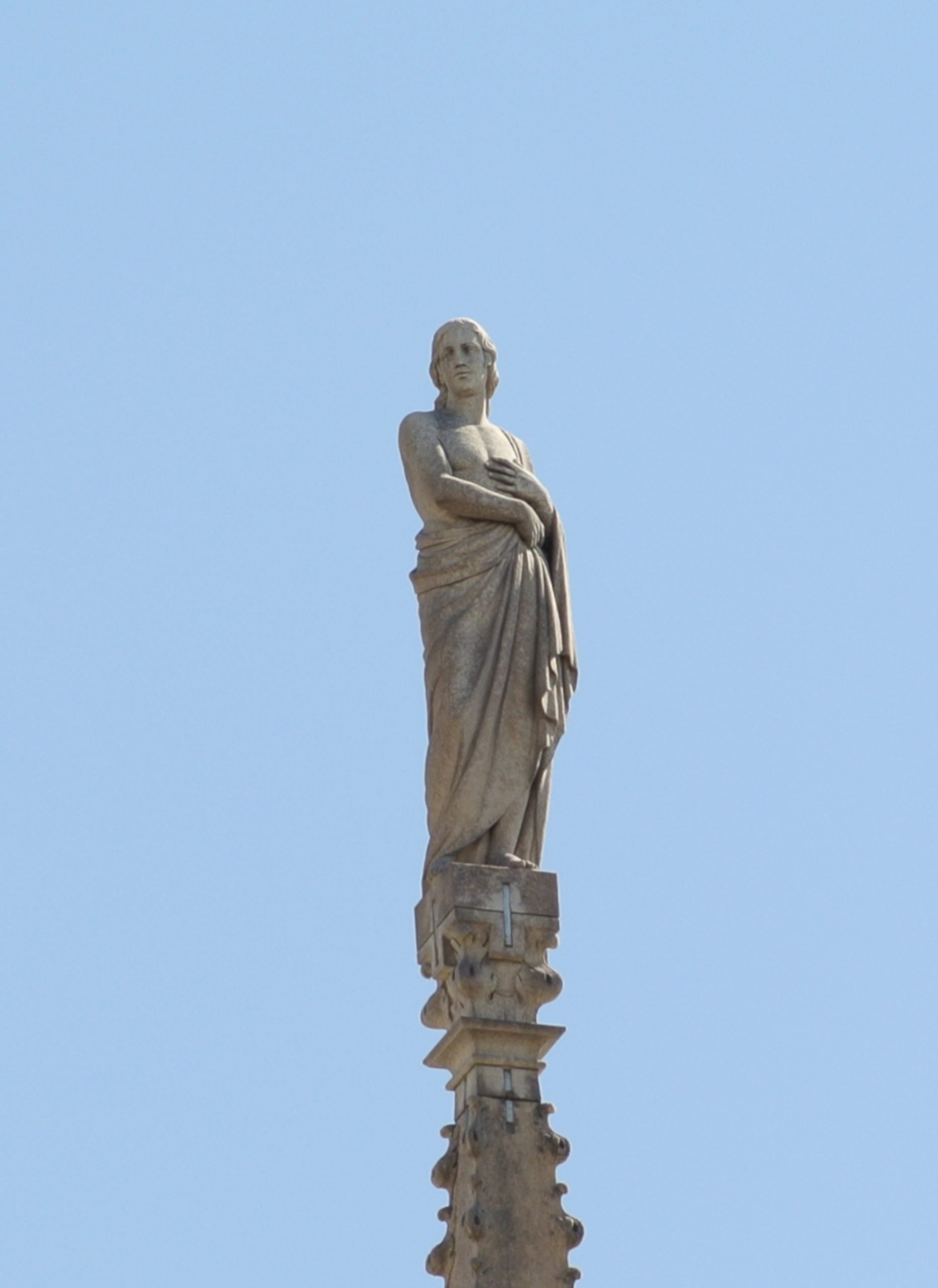
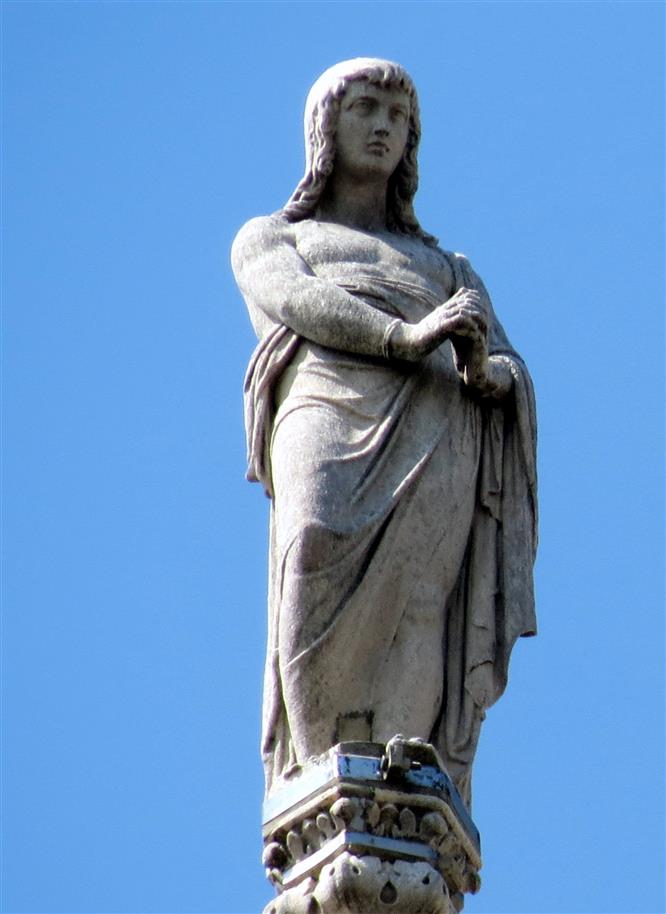
The statue that represents St. Agricola is a reproduction realized by Ambrogio Consonni, as the original was destroyed during the bombings of the Second World War. The statue rises at the top of one of the façade spires of the Cathedral. With hands joined in prayer and turned downwards, it welcomes the faithful entering the Cathedral, while his gaze is fixed on a distant point in the sky.

 Tiburio