



 25 August
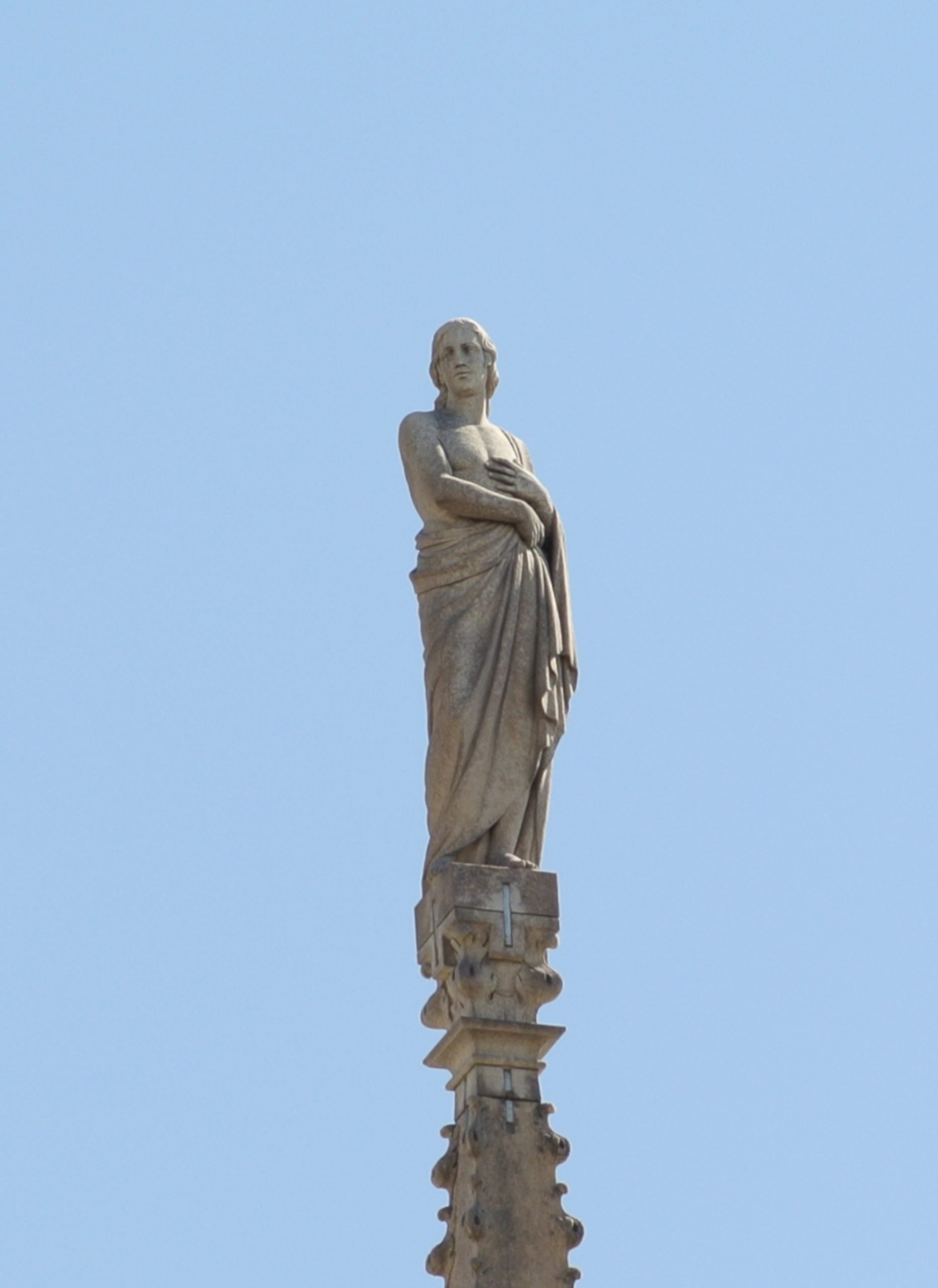
 Facade spire-G2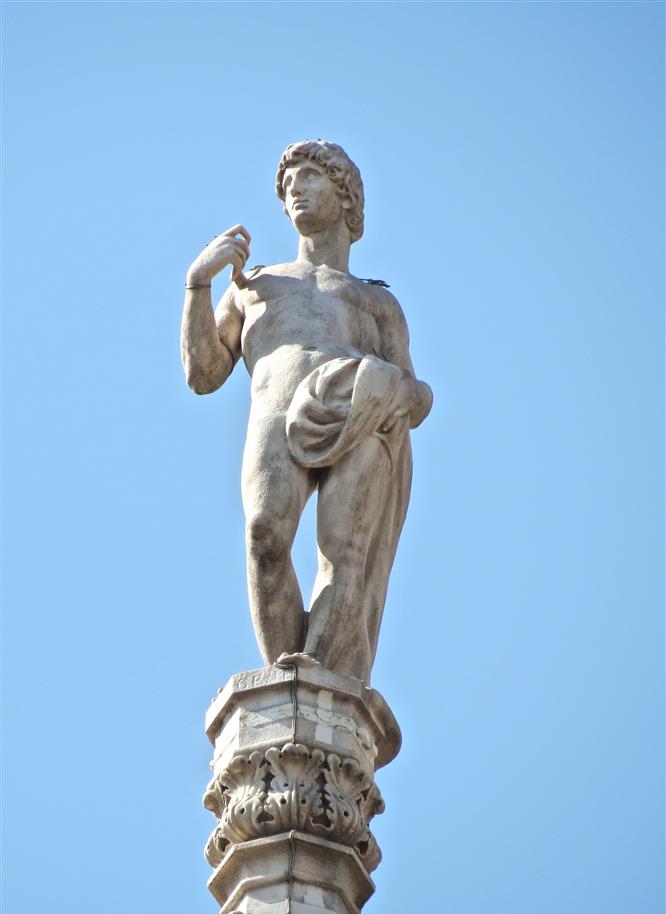
Etymology:
it derives from the Greek Γενέσιος (Genesios) and means “the one who generates”.
According to a sixth-century hagiography, St. Genesius of Rome was a mime by profession and a court comedian in Rome during the reign of the emperor Diocletian. When Diocletian visited the city on August 25th, 303 A.D., Genesius was asked to stage a performance parodying Christian Baptism. He initially pretended to be a dying man requesting baptism on his deathbed, but when the baptismal water touched his forehead, he had a vision and truly converted to Christianity. So, what had begun as a farce became genuine reality, though the audience remained convinced that he was still acting. As part of the performance, he was mockingly arrested by guards, brought in front of the emperor, and accused of belonging to an illicit religion: it was at that very moment that Genesius publicly professed his Christian faith, declaring himself before Diocletian and the public. The emperor, realizing that it was no longer an act, ordered Genesius to be flogged and handed him over to the prefect Plautianus, who tortured and beheaded him.
The history of the statue in the Duomo’s construction site:
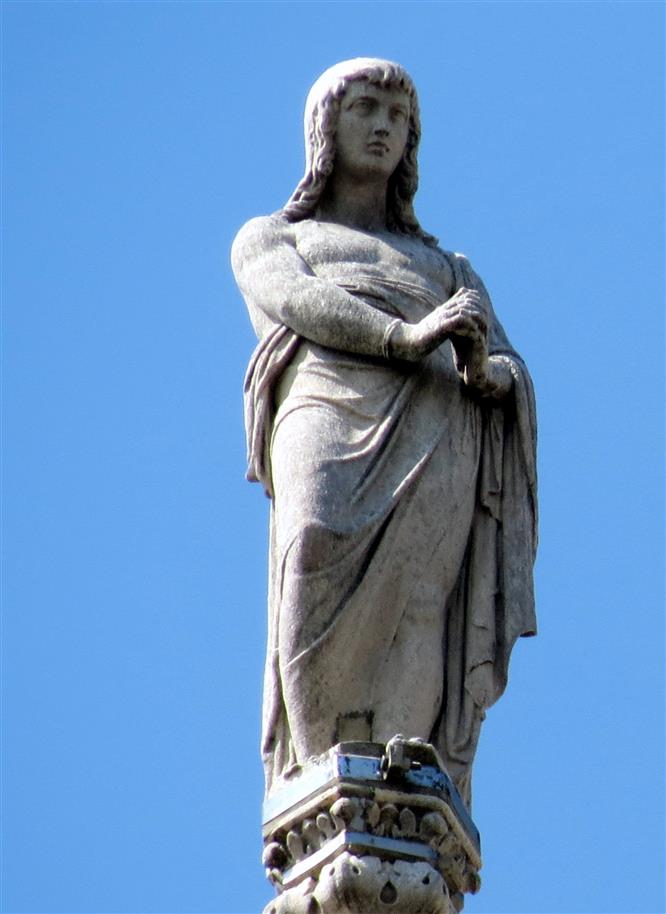
The statue of St. Genesius that can be admired today on the façade is not the original. It is a mid-twentieth-century reproduction by Mario Bassetti, because the original appears to have been destroyed during the bombings of 1943. The saint is depicted with the features of an athletic young man, in near-complete nudity, looking to the west toward the square.
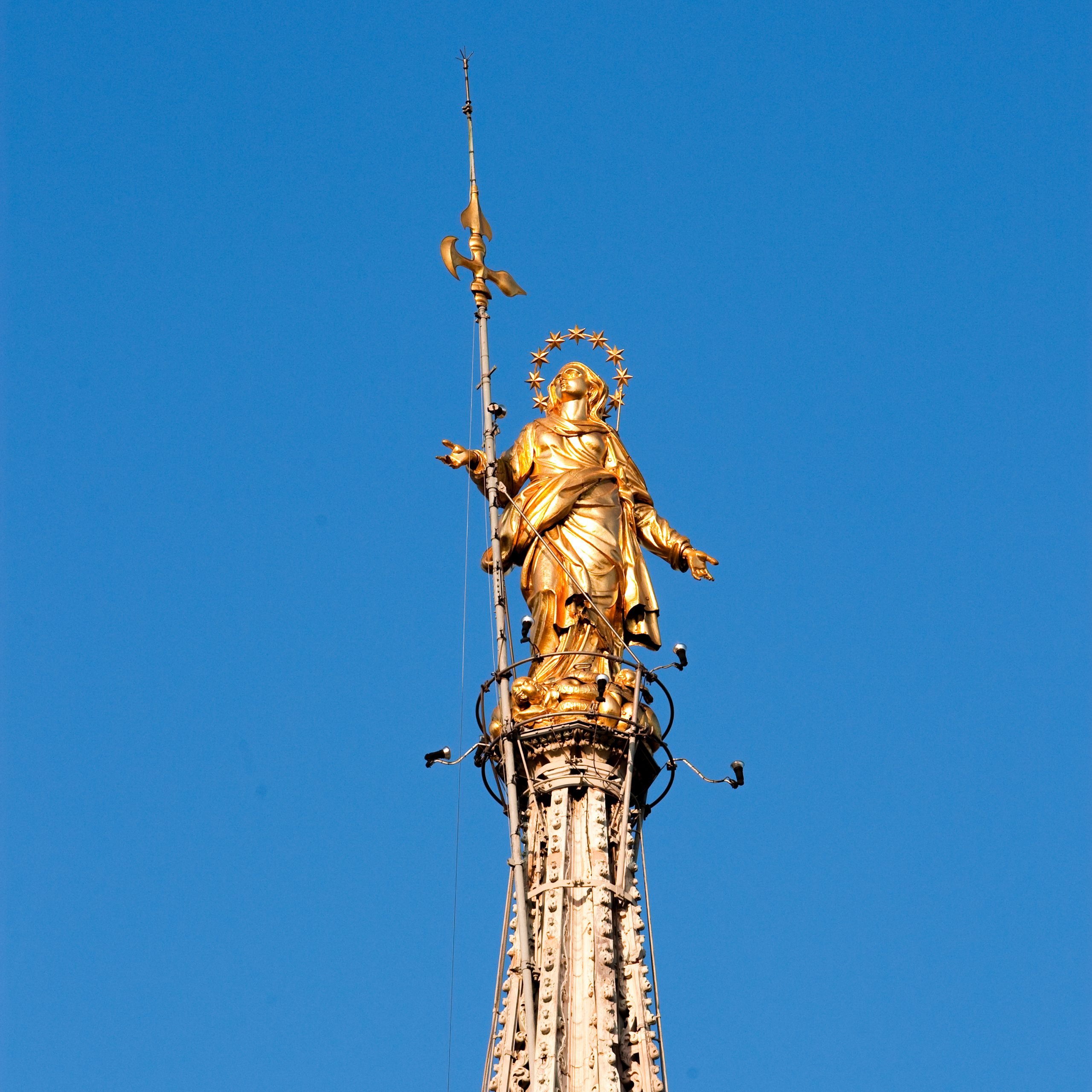
 Tiburio