



 North transept -G45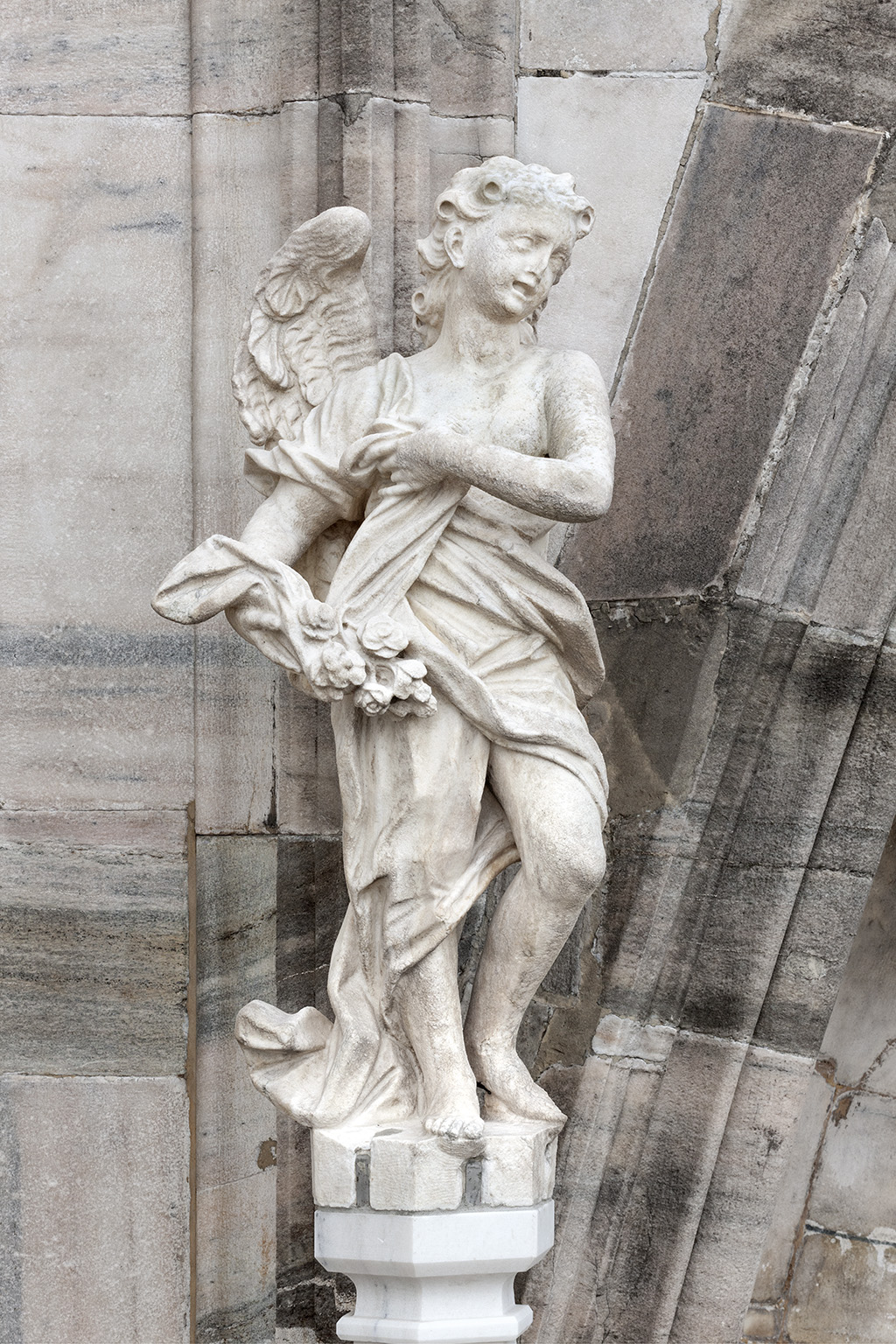
Etymology: the term derives from the Greek Ángelos (ἄγγελος), meaning “messenger.” In Italian, the word “angelo” has mantained this meaning and refers specifically to celestial beings who act as intermediaries between God and humanity.
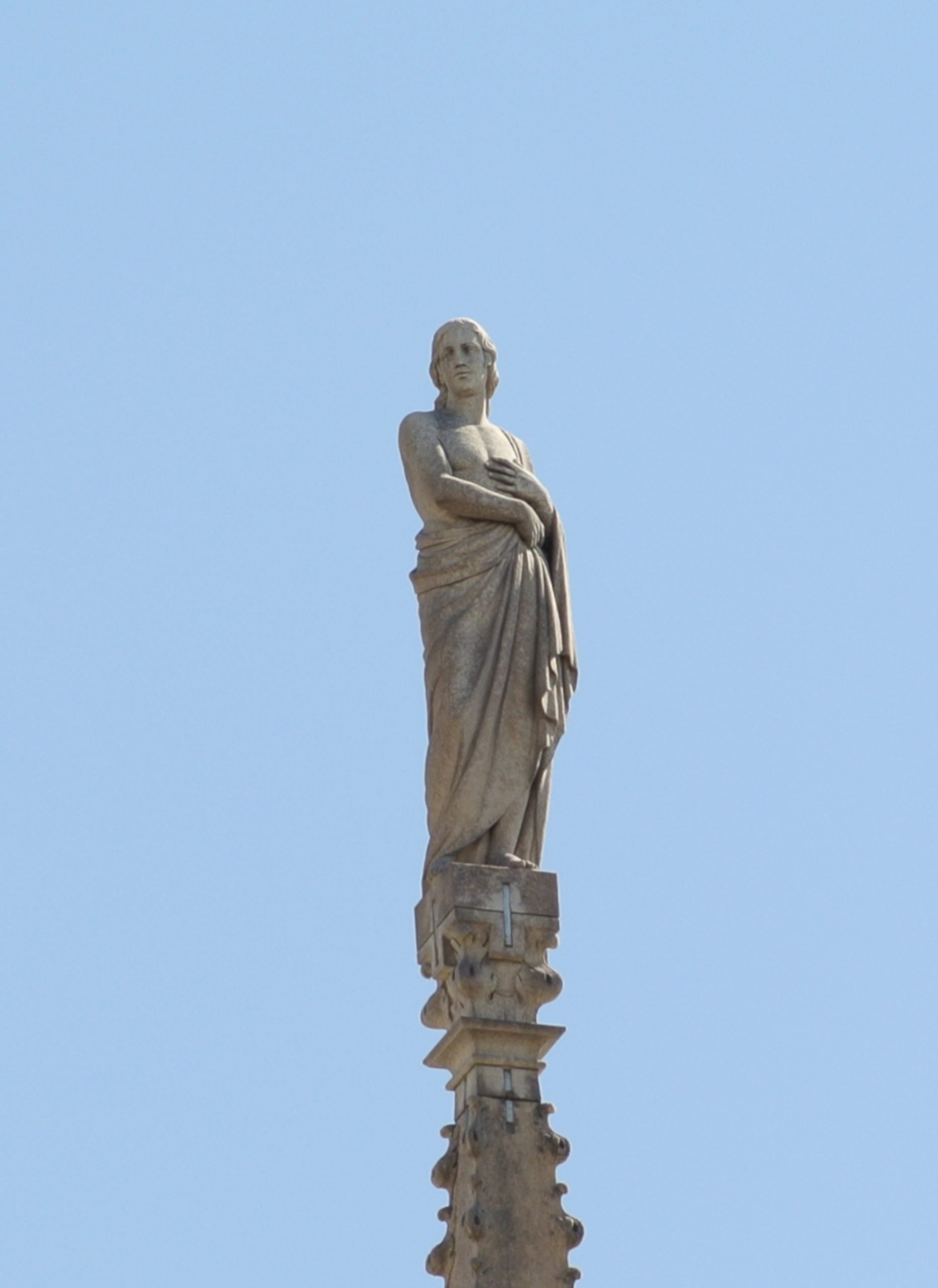
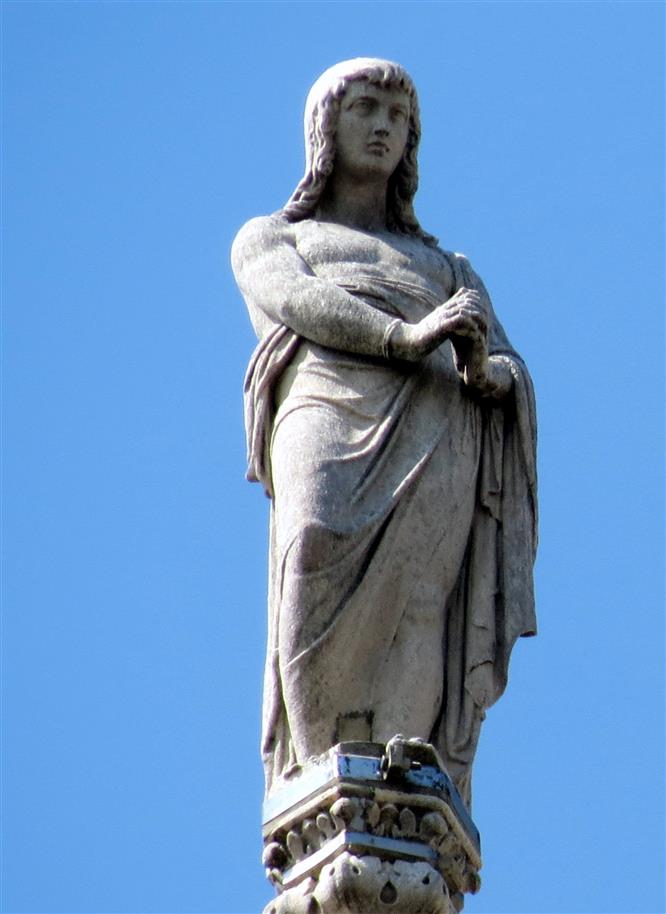
This spire is characterized by the depiction of an angel gracefully holding a bouquet of roses, wrapped and supported by a cloth. The iconography of the crown or bouquet of roses lends the sculpture a particular ornamental delicacy, distinguishing it within the overall sculptural program of the Cathedral. In the Christian tradition, the symbolism of the rose is rich with meaning: regarded as the “queen of flowers,” it represents purity and divine love. Often associated with the figure of the Virgin Mary, the rose carried by an angel transforms the messenger into a bearer of grace and spiritual beauty. Furthermore, the bouquet of roses represents charity and the fragrance of Christian virtues rising toward Heaven; in this context, the angel’s act of holding the flowers with a cloth emphasizes the sacredness of the offering, avoiding direct contact out of reverence for the purity of the symbol.
The history of the statue in the Duomo’s construction site:
The realization of the statue dates back to the first half of the 18th century. Both the preparatory model and the final sculpture were executed by Giuseppe Puricelli in 1733. An element of exceptional historical significance is that the statue currently visible on the spire is the original from 1733, preserved intact over time without the need to be replaced by a copy. As for the supporting structure of the spire, its installation can be dated to around 1730, carried out by the craftsmen active in the construction site at that time.
 Tiburio