



 22 April
 South Transept Spire-G3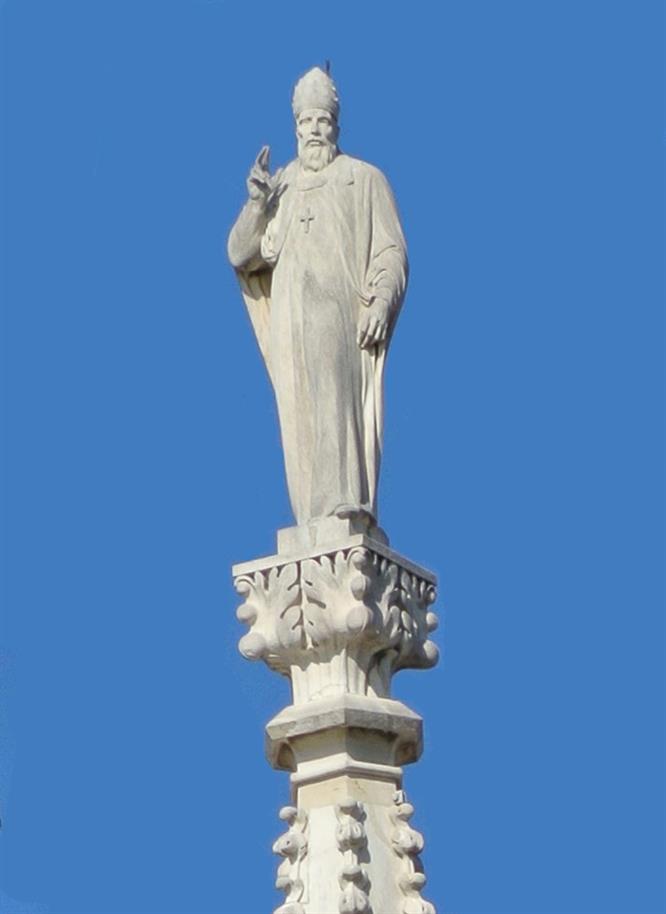
Etymology:
Caius derives from the Latin praenomen Gaius. Its precise origin is uncertain, but some theories link it to the root gaudere, meaning “to rejoice” or “to be glad.”
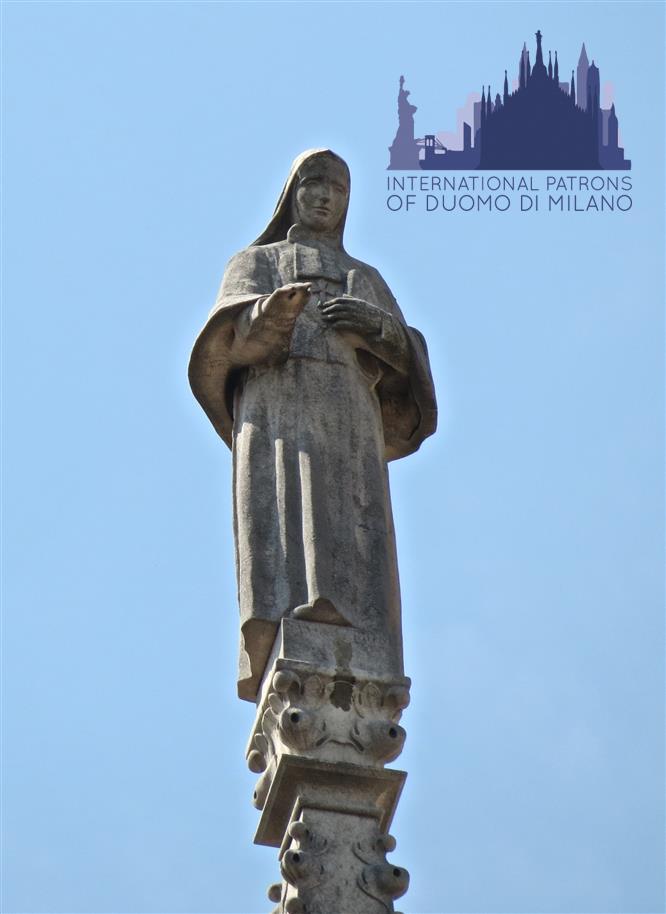
Christian iconography counts many saints with this name, including a Pope St. Caius and also a Bishop St. Caius. The mitre on the statue’s head leaves little room for doubt; it is therefore believed that it most likely represents one of the two, perhaps that Saint Caius who was consecrated Pope on December 17, 283 A.D. He was born into a noble Roman family in Salona, near present-day Split. The story goes that he had illustrious origins, including a family bond with the Emperor Diocletian. St. Caius died in Rome on April 22, 296 A.D. Sources recount his canonization, while his supposed martyrdom appears unlikely, especially considering that Diocletian unleashed the persecutions against Christians only in 303 A.D. The remains of St. Caius were initially placed in the Cemetery of Saint Callistus in Rome, and were later transferred to what had been his home, which was later converted into a church. In the second half of the nineteenth century, they were permanently placed in the chapel of the Barberini family.
The history of the statue in the Duomo’s construction site:
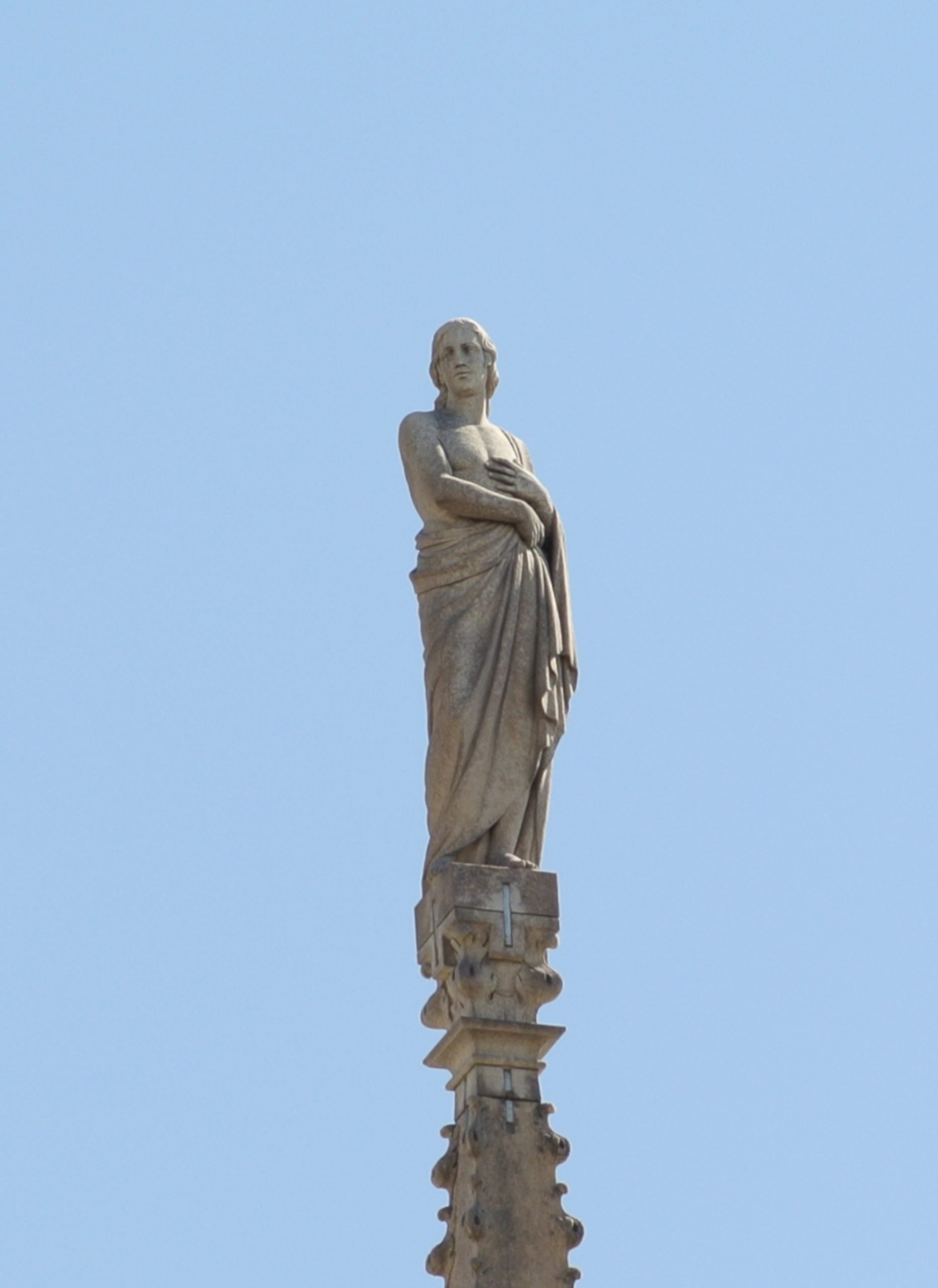
The statue at the top of Spire G3 was made by Ettore Cedraschi based on a model by Enrico Manfrini in the immediate postwar period, between 1951 and 1953. Depicted in papal vestments, with the mitre on his head, the cassock, and the cross on his chest, St. Caius is shown in the act of blessing all the faithful and visitors who enter and leave the Cathedral each day.
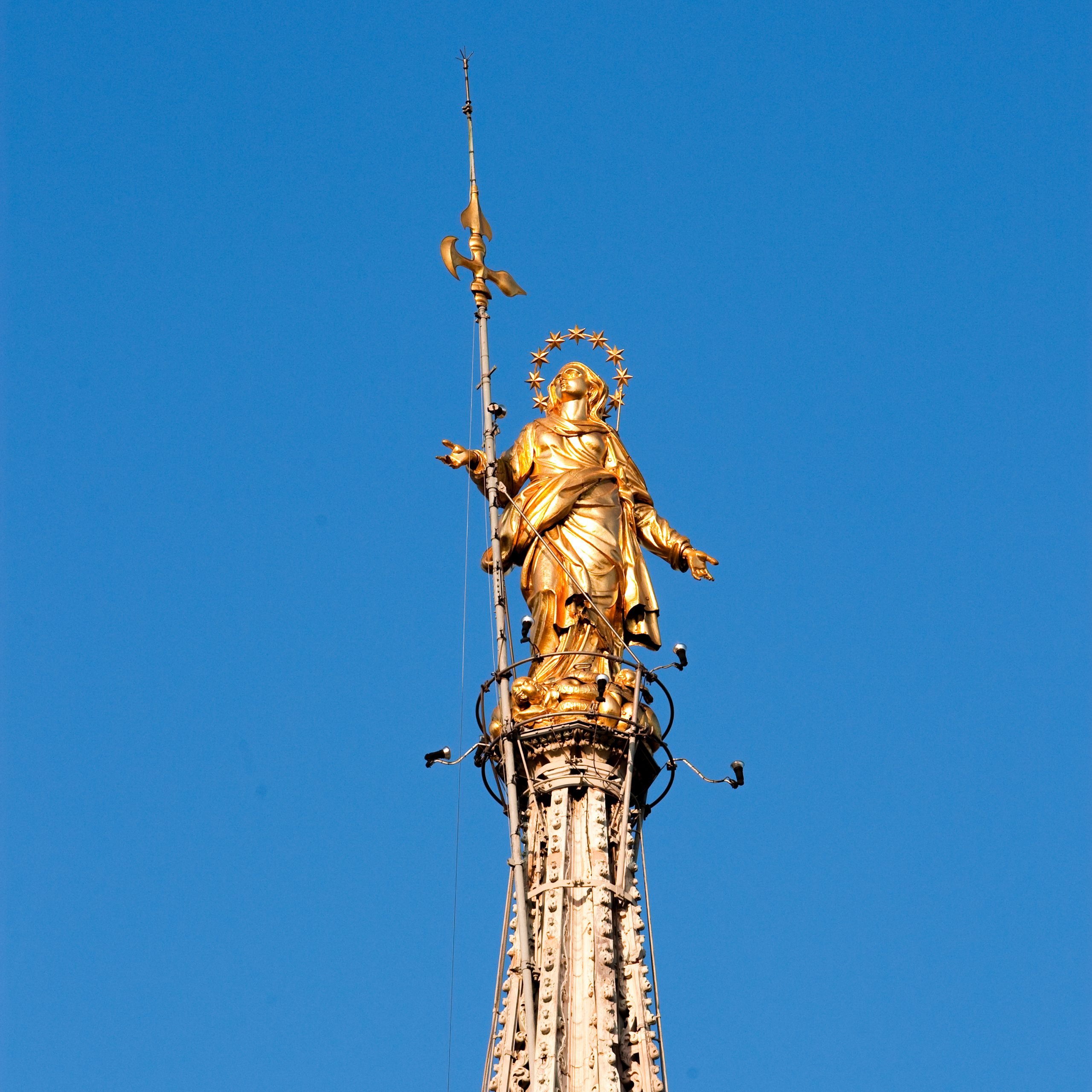
 Tiburio