



 15 November
 Facade spire-G16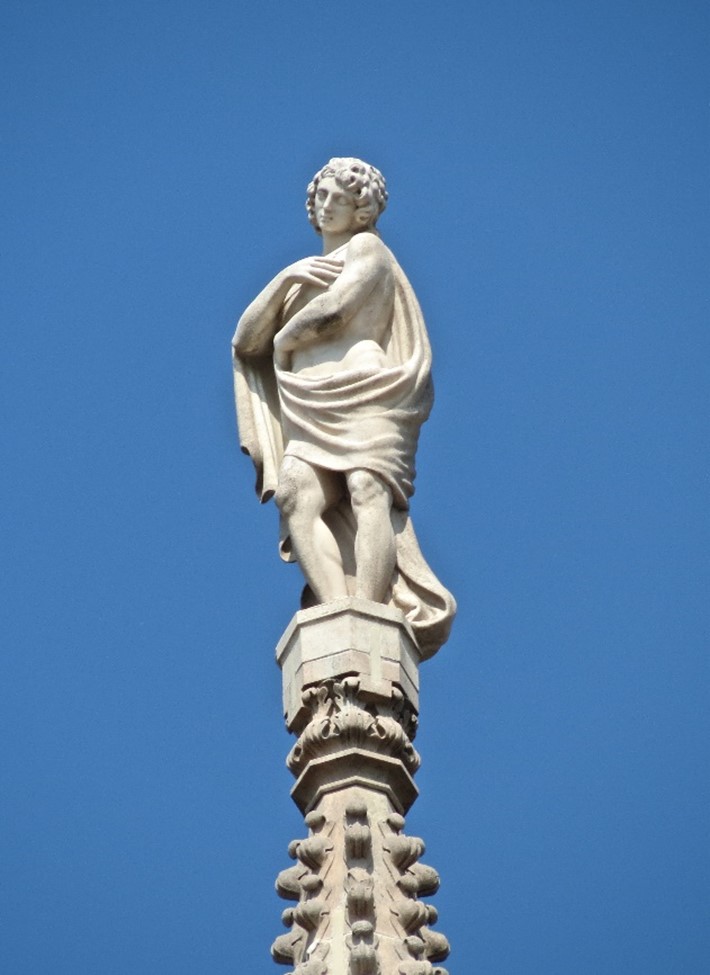
Etymology:
The name derives from the Latin Felix (-īcis) and means “fortunate”, “happy” but also “prosperous” and “fruitful”.
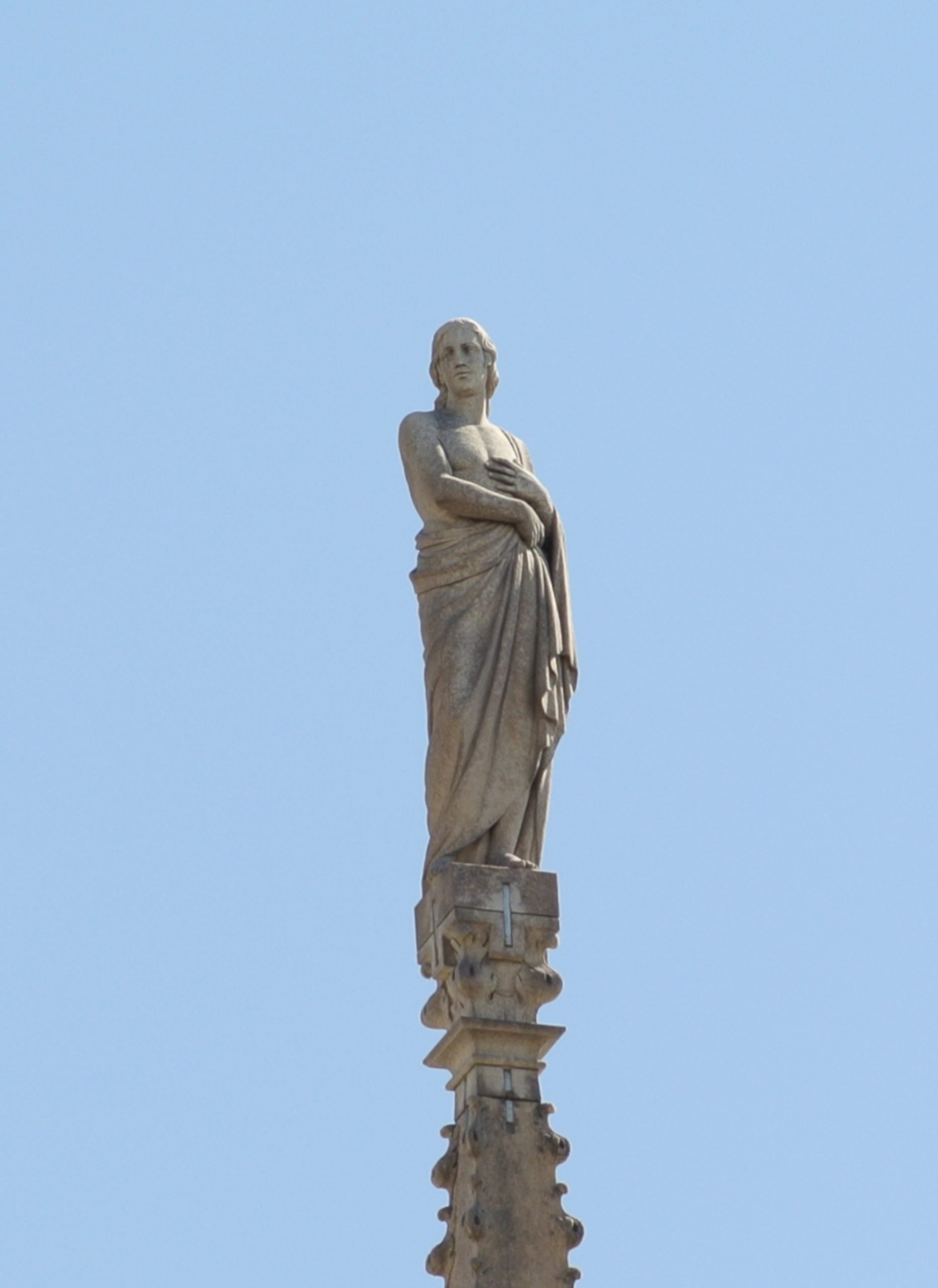
The name Felice is shared by several saints venerated by the Catholic Church. This statue can be identified with Saint Felix, who was born in Nola in the 3rd century AD and decided to dedicate his life to Christ as a presbyter. The information about him is derived from the work of Saint Paulinus of Nola, who enhanced the site of his burial in Cimitile, a locality a few kilometers from Nola, and produced the first historical document of his life. Saint Felix collaborated with the Bishop of Nola, who, during the persecutions against Christians, left the city and appointed Felix as his successor; however, Felix was imprisoned and tortured, and later miraculously freed by an angel who led him to safety in a remote place. The year of his death is unknown, the only certain fact is that it occurred after 313, the year of Constantinian Peace, when Felix returned to Nola. Although he was not killed, Felix has always been worshipped as a martyr, since he suffered greatly and was miraculously saved. The priest-martyr of Nola is commemorated on January 14.
The history of the statue in the Duomo’s construction site:
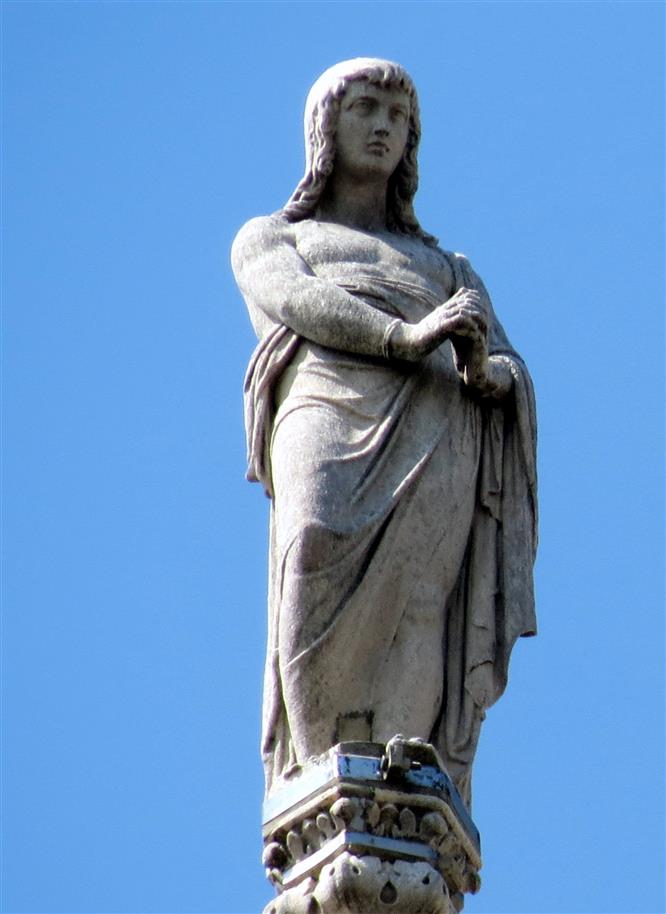
The statue of St. Felix is a reproduction made by Di Ceglie. The original statue, however, cannot be dated precisely; since it was carved by Grazioso Rusca, who conceived the model, it can most likely be placed in the first decade of the 19th century. Saint Felix is depicted as a martyr, with a cloth partially covering his harmonious body, his torso turned to the right and his head inclined in the opposite direction. The saint holds his arms across his chest in a gesture that likely suggests penance.

 Tiburio