




 23 April
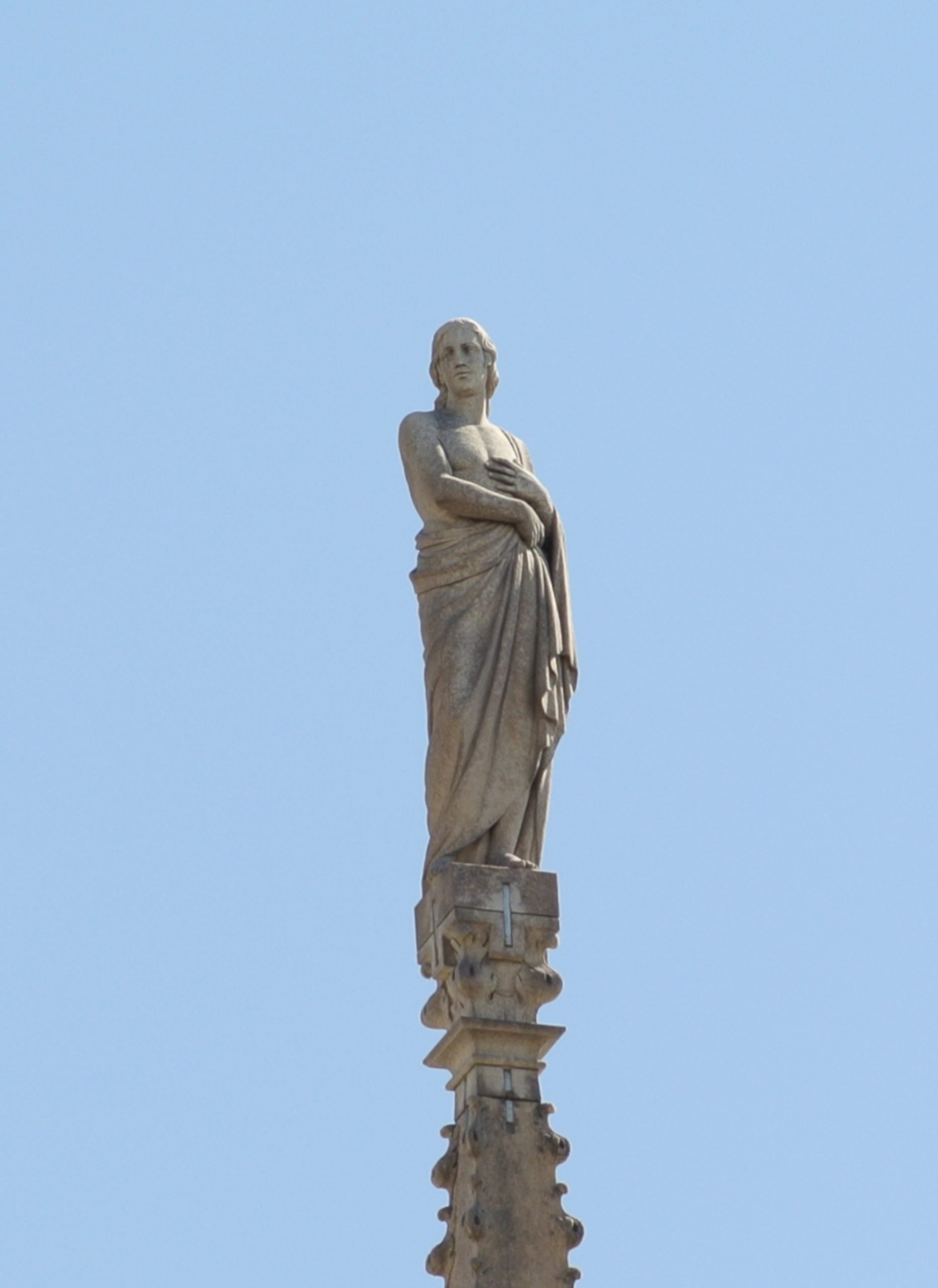
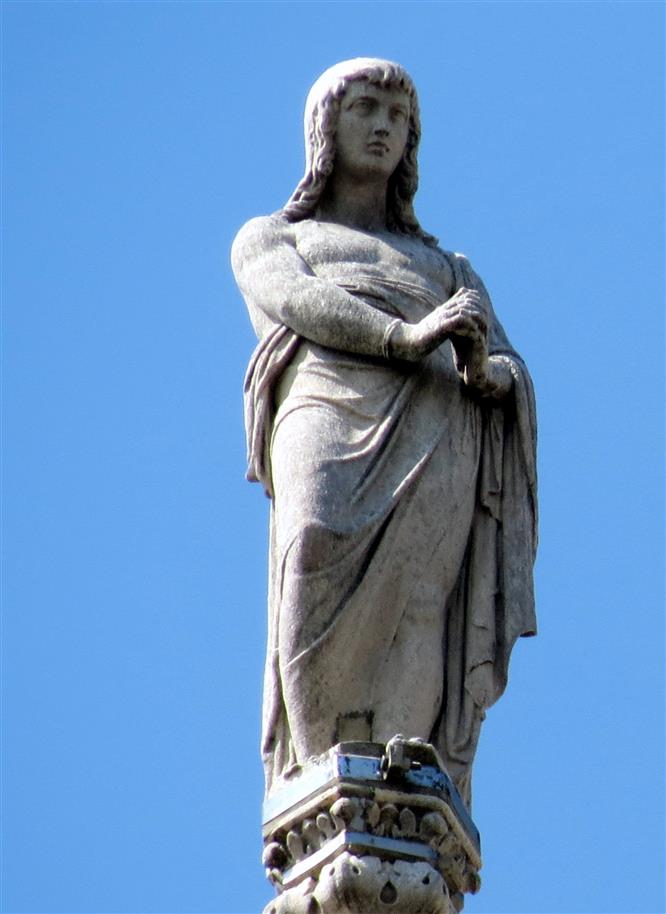
 Apse Spire-G6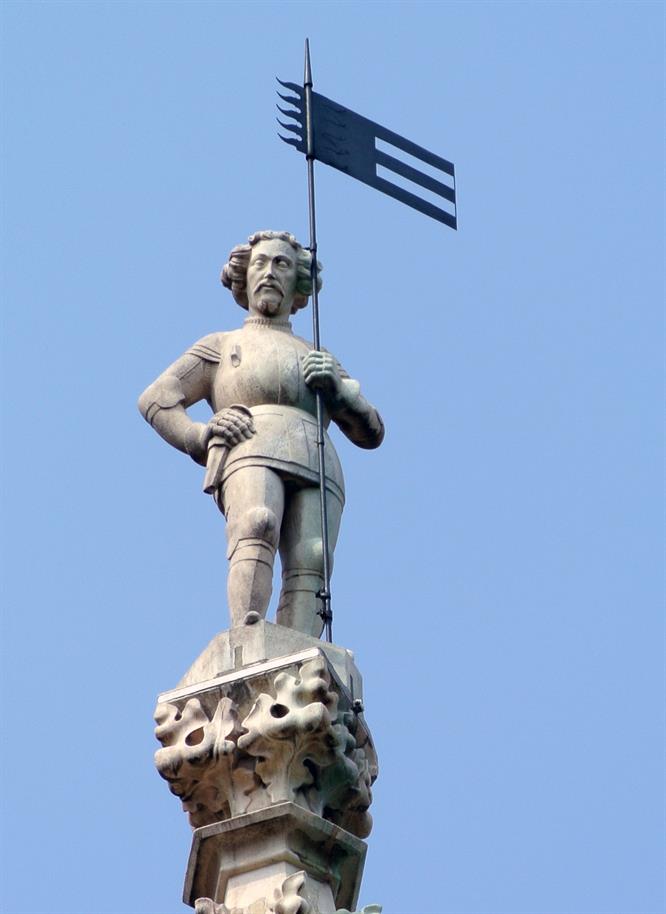
Etymology:
The name has Greek origins, composed of gê (“earth”) and érgon (“work”). It literally means “one who works the land.”
The cult of Saint George, martyr and knight, has always been among the most widespread in Christianity. His figure is shrouded in mystery, so much so that over the centuries many scholars have tried to determine who he truly was. St. George is universally recognized as a martyr and knight born in Cappadocia who lived under the rule of Diocletian. In Western iconography he is most often depicted holding a sword in the act of piercing a dragon. In the Legenda Aurea by Jacopo da Varagine, it is told how he defeated the dragon that terrorized Silene, a Libyan city, saving the king’s daughter from certain sacrifice. Witnessing this miracle, the king and the population converted to Christianity. The spire in question is also known as the “Carelli Spire” as it is dedicated to the memory of Marco Carelli, a well-known Milanese merchant and one of the first great benefactors of the Cathedral. Having no heirs, in the Jubilee year of 1390 he decided to appoint the Veneranda Fabbrica del Duomo as his universal heir, donating to the institution a sum of 35,000 gold ducats.
The history of the statue in the Duomo’s construction site:
The statue of St. George is located on the apse spire facing north, on top of what is considered the first spire erected on the Cathedral. The statue is a copy made in the 1950s by Mario Bassetti to preserve the original St. George, a work dating back to 1403 created by Giorgio Solari and currently displayed in the Duomo Museum. During the aerial bombing of 1943, the Cathedral was severely damaged: as it fell, the original St. George lost both legs and the sword in his right hand, while part of his head was sliced away. In 1954 the work underwent extensive restoration in preparation for its display in the Museum, including the reattachment of the head and the reconstruction of the parts that had been destroyed.
 Tiburio