



 19 June
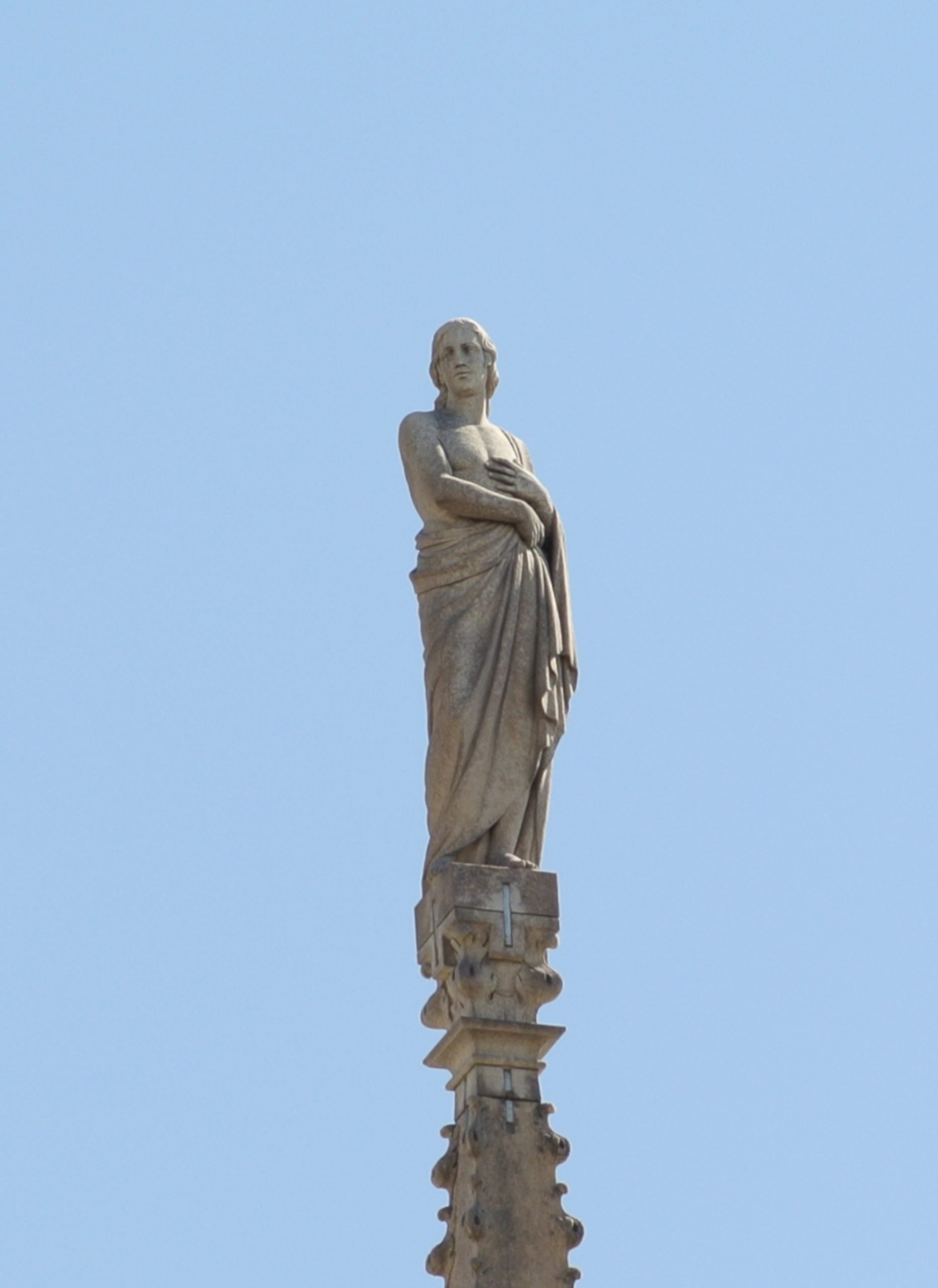
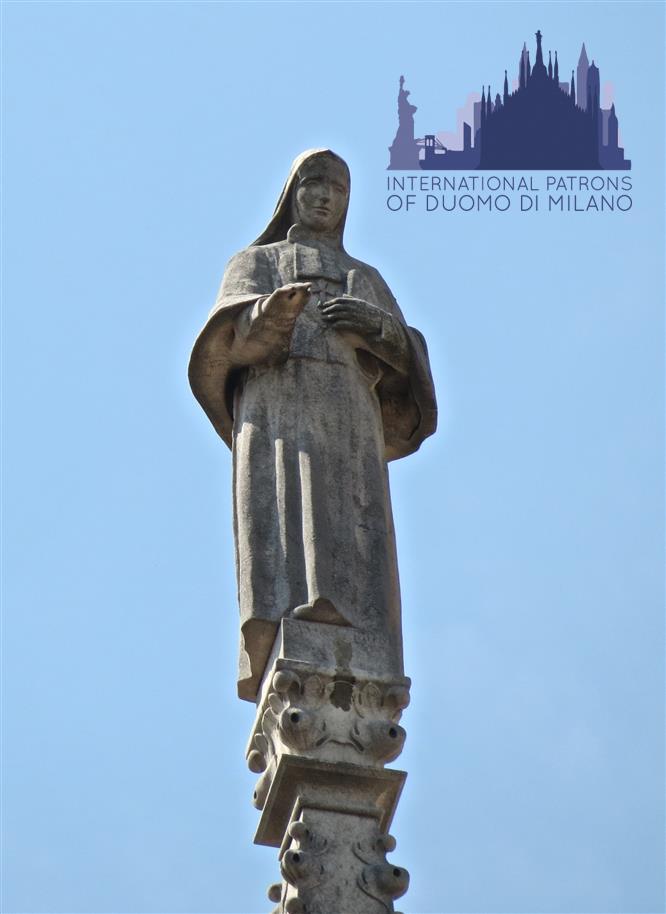
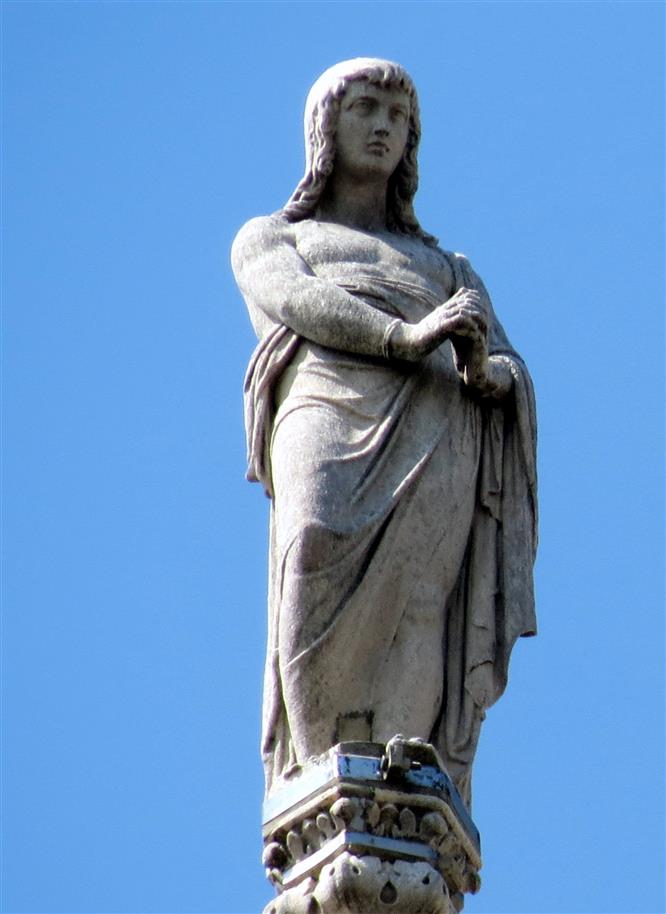
 Facade spire-G11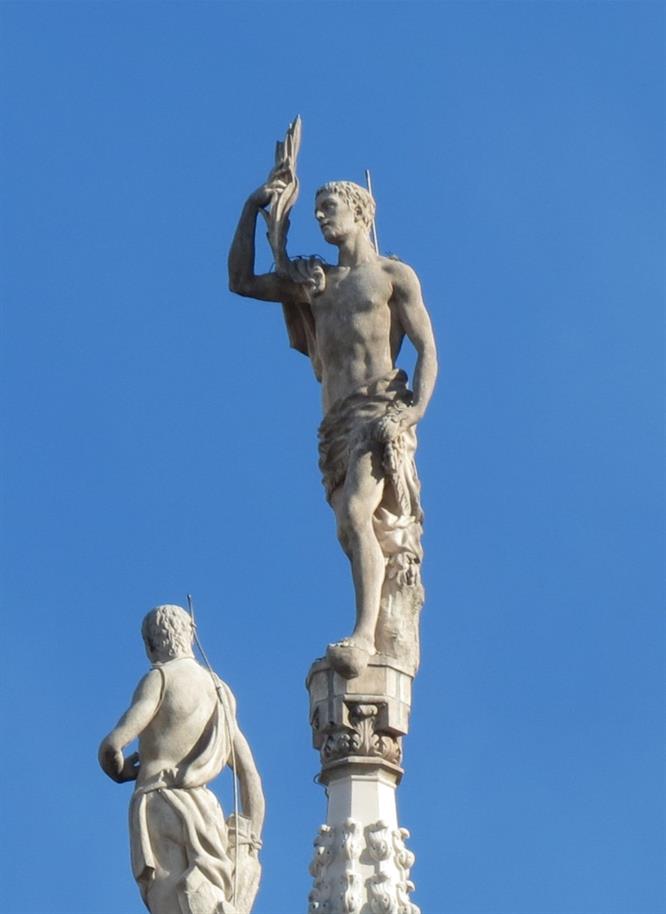
Etymology:
of Germanic origin (from ger “spear”and was “skilled”) this name means “skilled with the spear”.
Sources describe Saint Gervasius and Saint Protasius as twin brothers, sons of Saints Vitalis and Valeria, who were killed for being Christians. After the death of their parents, the two brothers sold all their family possessions and distributed the proceeds to the poor, then withdrew into a life of meditation. Ten years later, they were discovered and denounced to the authorities, who captured them and brought them before Astasius, a legionary of the imperial army passing through Milan, so that they might offer sacrifice to the gods. Nothing more was heard of them until June 386 AD, when their remains were discovered during excavations commissioned by Saint Ambrose in the area of Porta Vercellina in Milan. On 19 June of the same year, the bodies were transferred to the Basilica Fausta for a vigil of prayer, and the following day to the newly completed Basilica of Saint Ambrose, which was consecrated with the deposition of these relics, where they still rest today.
The history of the statue in the Duomo construction site:
The statue of Saint Gervasius is the work of the sculptor Ambrogio Consonni, created in 1950. The Saint is depicted as a martyr: the figure is dynamic, striding forward with the palm of martyrdom raised high with courage. The palm is universally recognized as a symbol of sacrifice, but also of victory, ascent, and rebirth. Some photographic records from the Archive of the Veneranda Fabbrica del Duomo show an inscription at the base of the statue bearing the name “Gervaso”.
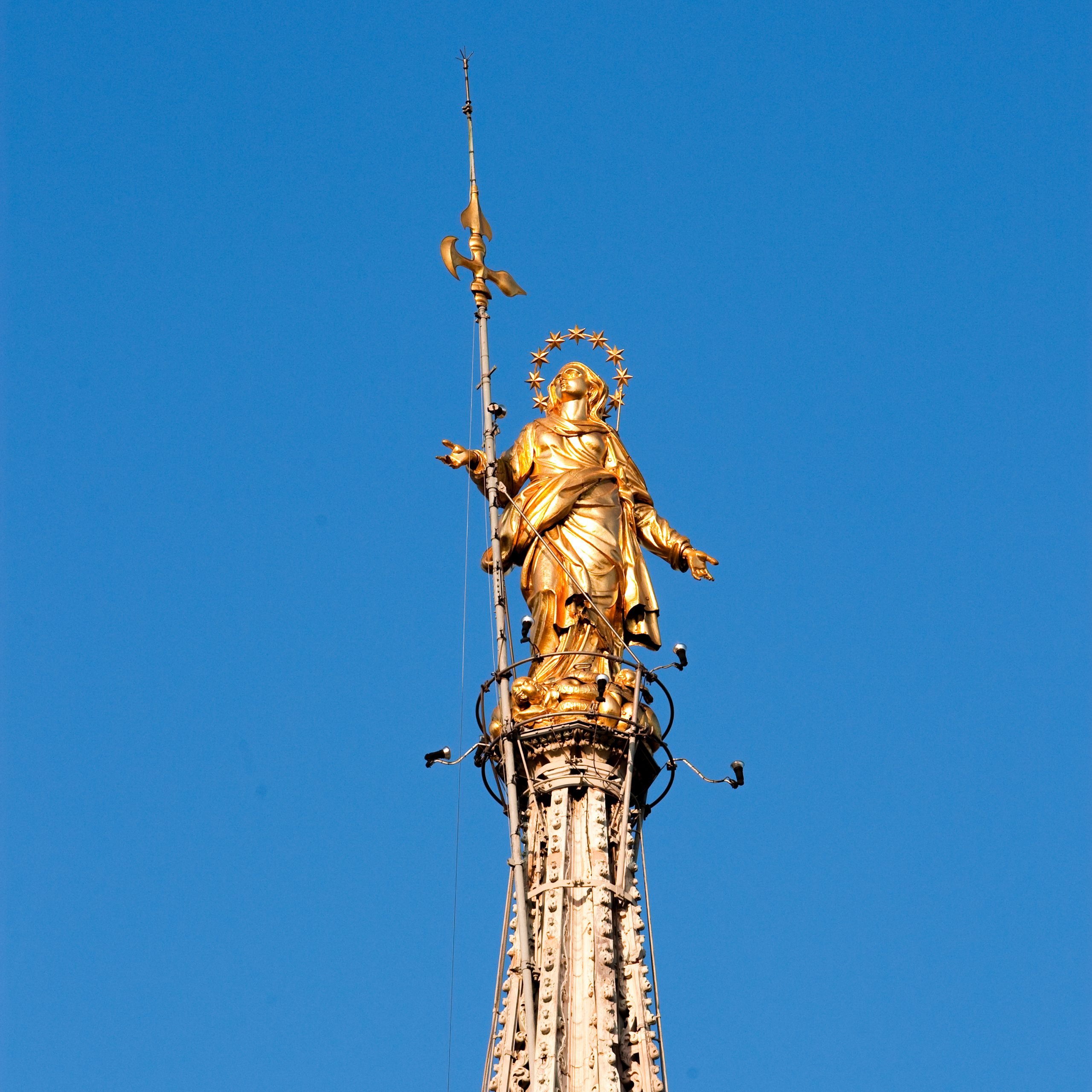
 Tiburio