



 04 November
 Facade spire-G18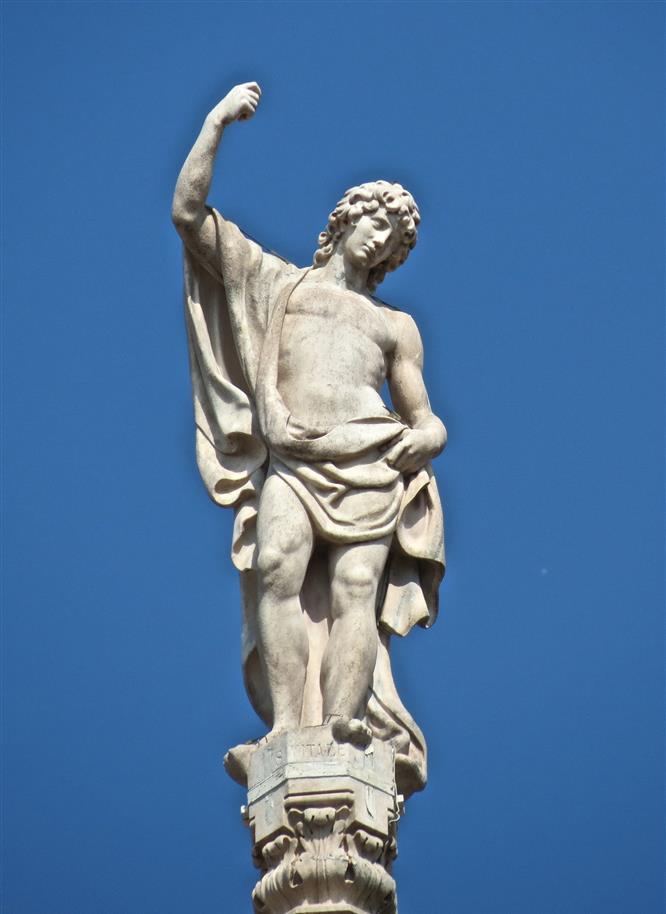
Etymology:
The name Vitalis derives from the Latin Vitalis, and literally means “full of life” or “life-giving”.
Vitalis, together with Agricola, is a martyr to whom the origins of the Church of Bologna are owed. Saint Vitalis remained unknown until 392 AD, when Bishop Eusebius rediscovered his remains in a Jewish cemetery in Bologna; he gave him a proper burial according to Christian funeral rites, which was also attended by Saint Ambrose, who later contributed to the spread of the cult of the Saint in the West. In any case, little is known about his life, except that Vitalis was a Christian citizen of Bologna and a servant of Agricola. Vitalis had followed his master also in faith and was the first to face martyrdom: after being led into the arena, he was tortured to death. Agricola too was tortured and martyred, encouraged by the courageous act of his faithful servant.
The history of the statue in the Duomo’s construction site:
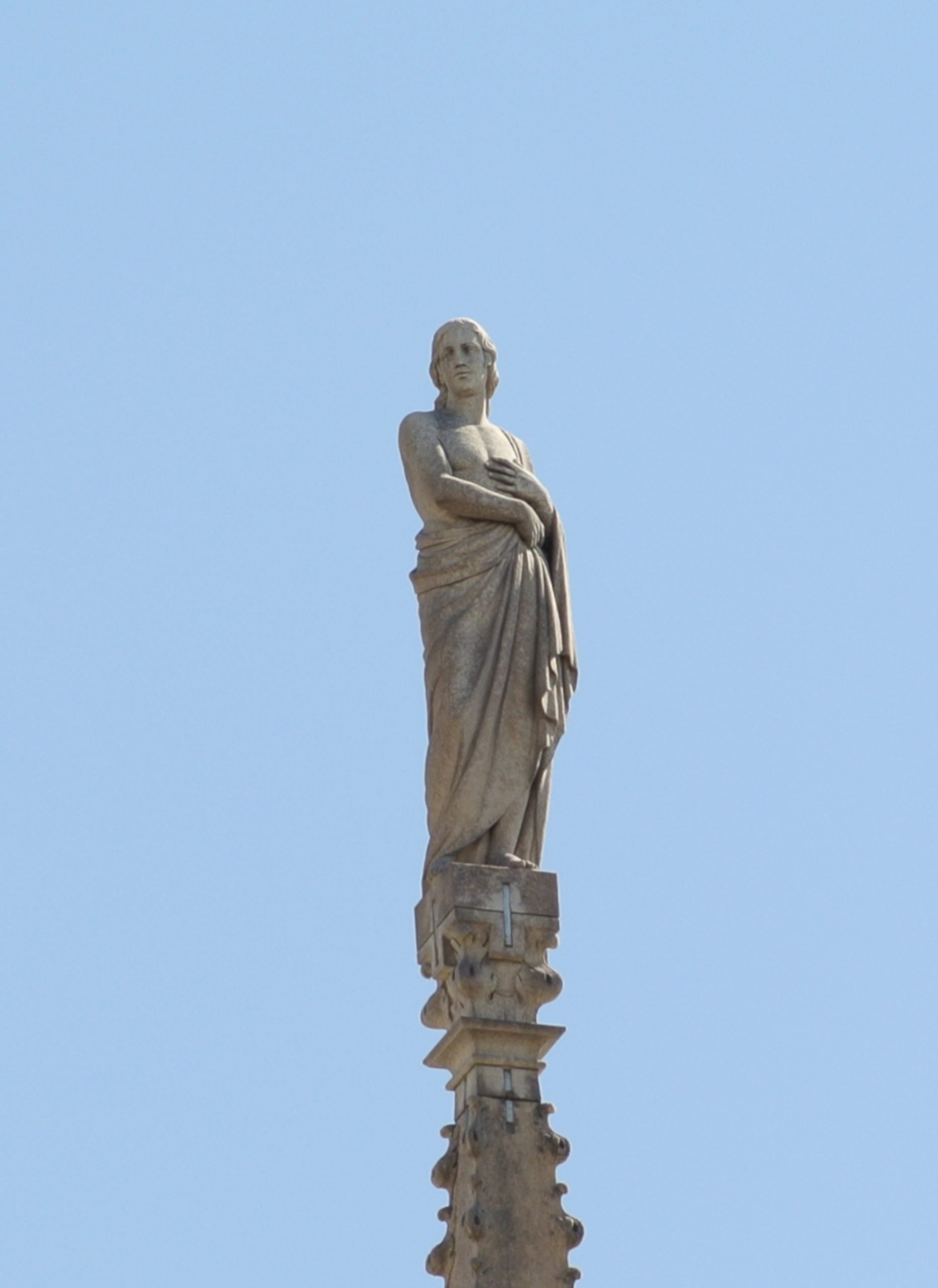
The statue depicts Saint Vitalis as a young man with thick, curly hair, his body partially draped in cloth. His right arm is raised, perhaps he once firmly held the palm of martyrdom. Vitalis’ identity is confirmed by an inscription at the base; however, this is a reproduction created by the sculptor Mario Bassetti around 1943, likely made after the spire was damaged during wartime bombings. One of the features that strikes the more attentive observer is its placement on the façade, like the statue of Saint Agricola, as a lasting testimony to the bond between the two saints.

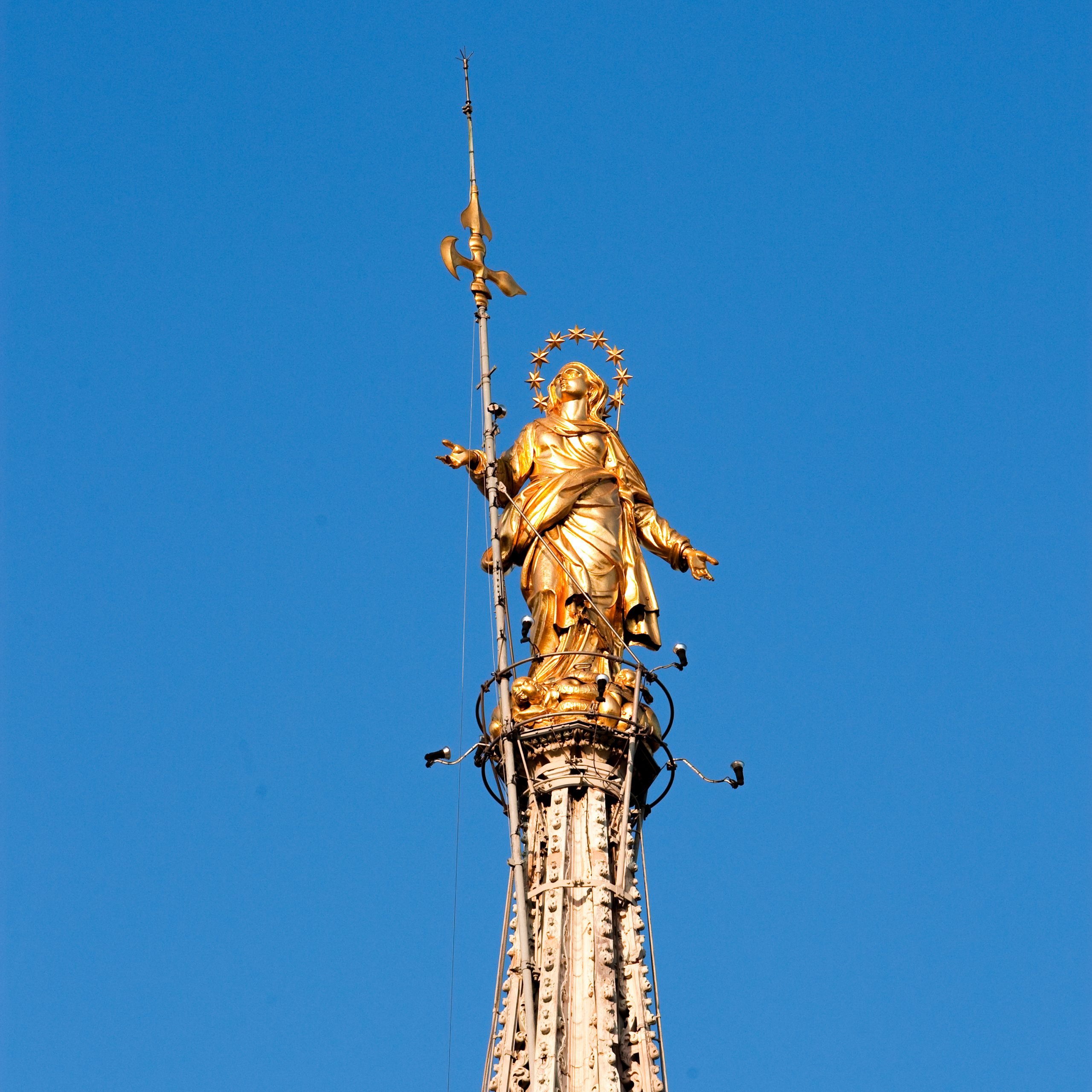
 Tiburio