



 Apse Spire-G5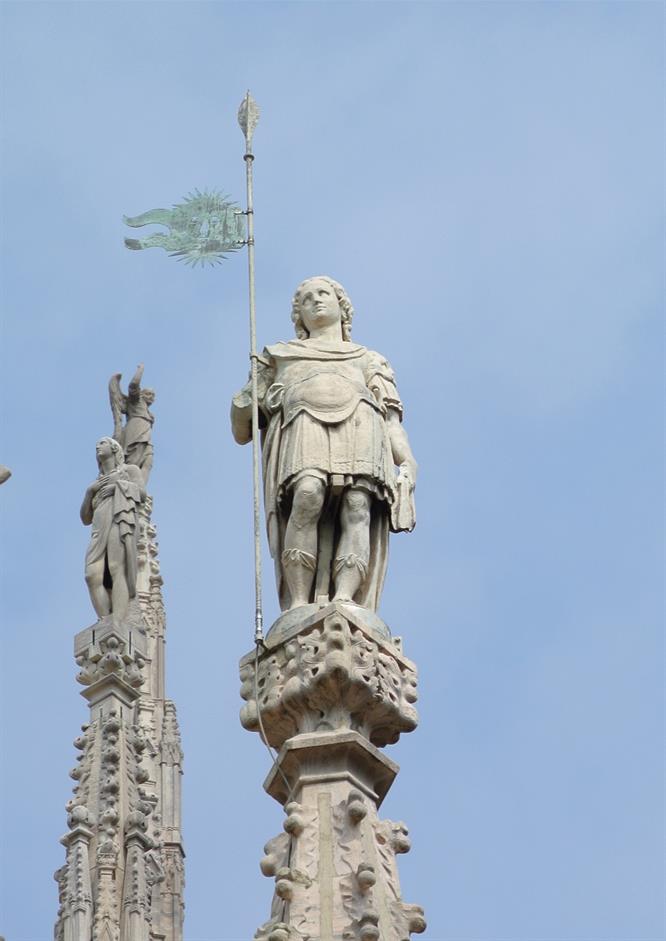
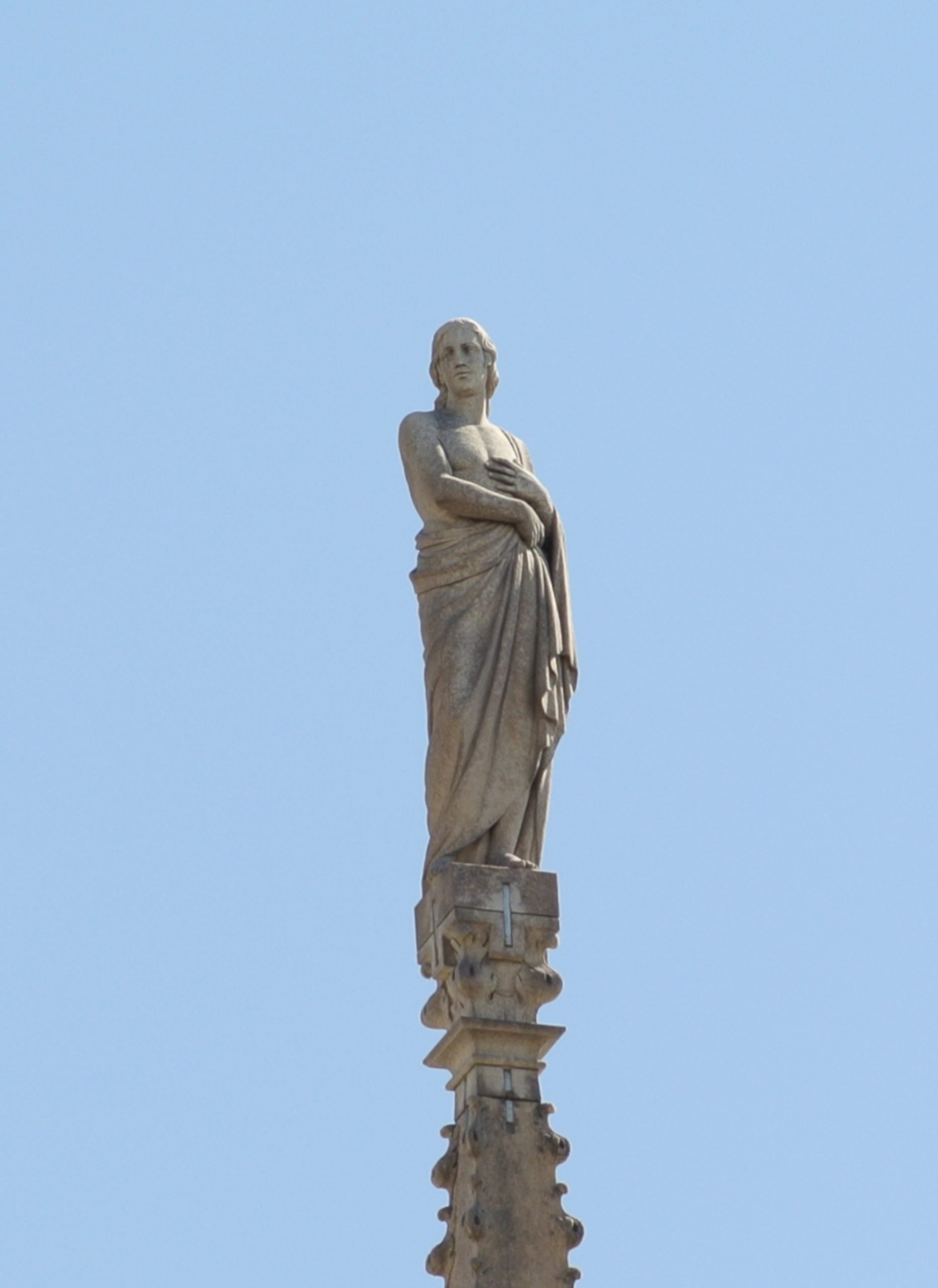
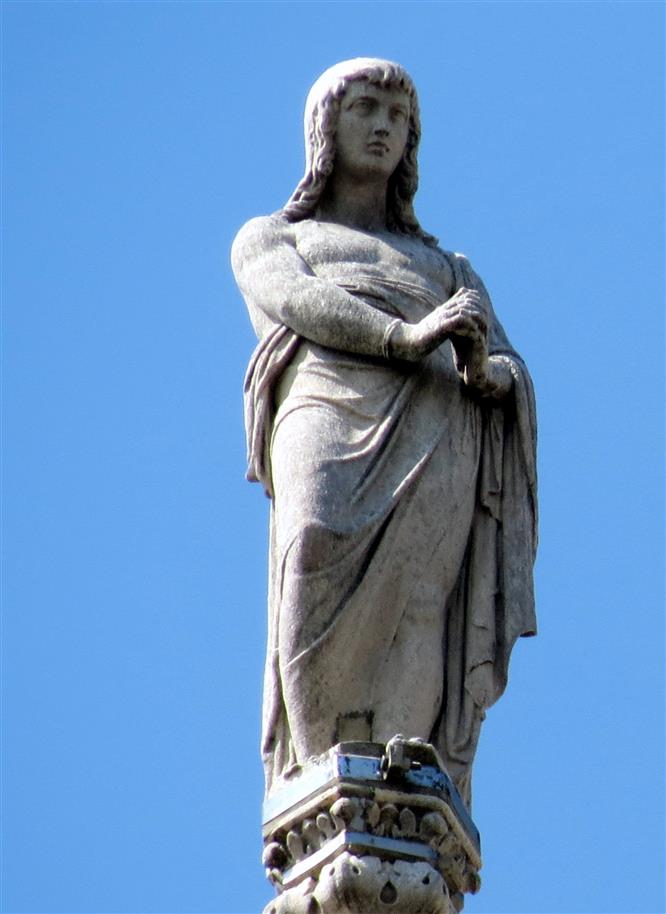
Placed at the extreme south of the apse, this warrior holds in his right hand a staff topped with a bronze ensign. The ensign depicts the Razza Viscontea, the sun symbol of the Visconti family which appears most prominently in the central apse stained-glass window. At its center there seems to be a bird – perhaps an eagle – symbol of the imperial vicariate: a symbol that is equated to the Visconti snake by concession of Emperor Wenceslaus of the Holy Roman Empire, when he crowned Gian Galeazzo Visconti as the first Duke of Milan. Whatever its true meaning, this warrior is in the service of the Visconti family, as also demonstrated by the symmetry of his position with respect to the Carelli Spire (G6), where another valiant and celebrated knight stands. His task is to protect the Cathedral and the city of his Duke, ready to raise the alarm when an enemy moves toward Milan. Then, perhaps, all 2,300 statues will come to life, the bronze doors will close and from the spires the 135 figures of saints, warriors, and martyrs will descend to form a shield of solid stone. Because only the hardness of the marble and the stillness of memory serve as a defense against the enemy.
The history of the statue in the Duomo’s construction site:
The warrior with the ensign is a reproduction whose author and date of execution are unknown. We know, instead, that the original one was realized in the distant 1659 by Giuseppe Vismara, a well-known sculptor of his time. We don’t know who this brave warrior represents, also because no name is ever mentioned in the Archive’s documents – indeed, the statue is referred to by its own author simply as a “soldier”.
 Tiburio