




R.f. Celada adotta il Gugliotto dell’Amadeo del Duomo di Milano
Generous support for the “Adopt a Spire” project as a Major Donor
Founded in 1387 by Gian Galeazzo Visconti to design and build the cathedral, the Veneranda Fabbrica has been working for over 630 years to preserve and restore all the architectural features of the Duomo, including its 135 distinctive spires. One of the most iconic and recognisable features, the spires of the Duomo are exposed daily to the elements and pollution – natural factors which, over time, lead to their inevitable deterioration and, consequently, the need for restoration work.
“Adopt a spire. Sculpt your name into history” is a project created in 2012 with the aim of fundraising for the care and conservation of the spires, thanks to the invaluable support of private individuals, associations and companies.
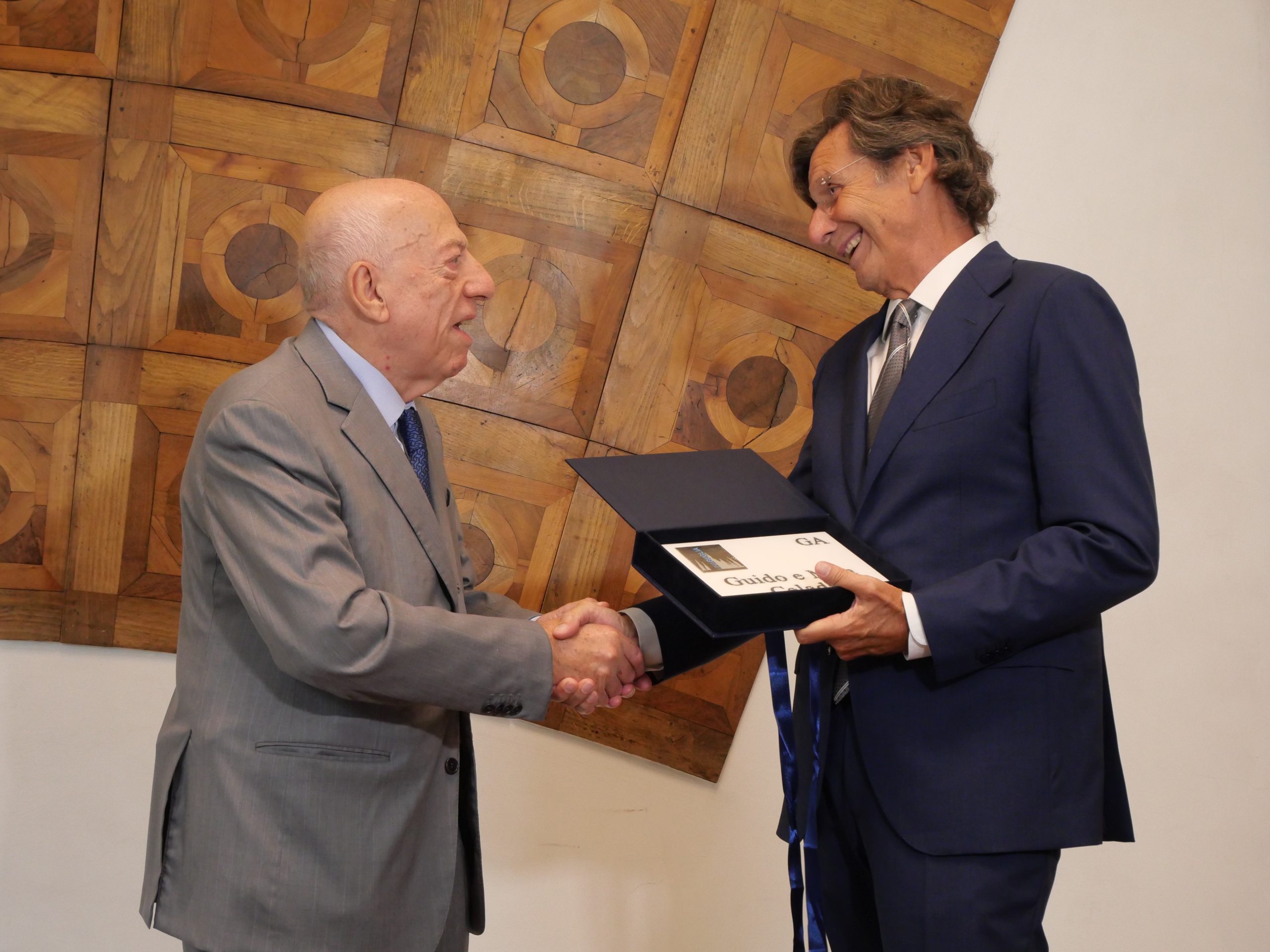
Among the companies that have committed to preserving the Monument, R.F. Celada is certainly one of the most deeply rooted in the Milan area, having quickly become a point of reference abroad as well: founded in 1938, the company is now an international leader and expert in the sale and servicing of machine tools. To mark the 85th anniversary of its founding, Celada has chosen to sponsor one of the spires of the Duomo as a Major Donor, sharing the beauty of the cathedral not only with those who have contributed to the company’s success, but also with all the citizens of Milan. This initiative is a tangible way of demonstrating the company’s commitment to preserving Milan’s cultural heritage and helping to safeguard its timeless beauty.
Amedeo’s Gugliotto and his “Holy Warrior”
The spire adopted by Celada is in fact a ‘gugliotto’, that is, one of those more massive spires in terms of size and volume that surround the Tiburio of the Cathedral, upon which the Main Spire with the ‘Madonnina’ rests, serving both an ornamental and a structural purpose. There are four spires on the cathedral, and it was the ‘Gugliotto dell’Amadeo’ that was the first to be built, about which there is a wealth of historical information. Construction is recorded as having begun on 23 August 1507, and it is named in honour of its designer, Giovanni Antonio Amadeo (c. 1447 – 1522), a sculptor and engineer at the Fabbrica del Duomo from the sixties of the 15th century until the final years of his life. Featuring exquisite decorations centred on the topic of the Eucharist, the defining feature of the Amadeo is its internal staircase, which for many centuries was also the only way to reach the upper part of the Tiburio, via the stairwells. At the top, there is a statue of the “Holy Warrior”, which perfectly embodies the style that has always characterised Celada: a company founded on deep-rooted values, where tradition and innovation are masterfully intertwined. In the first half of the 18th century, the spire of the Amadeo was severely damaged by a series of extreme weather events, including two lightning strikes and probably a tornado, to the extent that consideration was given to whether it would be better to remove the entire spire and rebuild it rather than restoration, but this latter solution was chosen.
The dedication and generosity shown by companies such as Celada serve as a daily reminder of the importance of supporting the preservation of the Monumental Site. Thanks to this precious contribution, it will be possible to continue work over the next two years on the Basso Tiburio, the vast system of architecture of which the Gugliotto dell’Amadeo forms part: the restoration of the great octagon, from whose roof rises the Gran Guglia, has led to a reflection on the complex structural issue of the four arches – which even brilliant minds such as those of Bramante, Filarete or Leonardo da Vinci were unable to resolve – and to an investigation into the state of preservation of the 16 large chains that support it. Thanks to an innovative experimental study conducted in collaboration with the Politecnico di Milano, it has been found that the on-site reinforcement works under a stress far greater than previously thought: this makes it necessary to further study and maintain this complex and highly delicate structural system.
Further Information:
Donations Office
Veneranda Fabbrica del Duomo di Milano
Via Carlo Maria Martini, 1 – 20122 Milano
Freephone number: 800.528.477 (Italy only)