



 North Transept -G47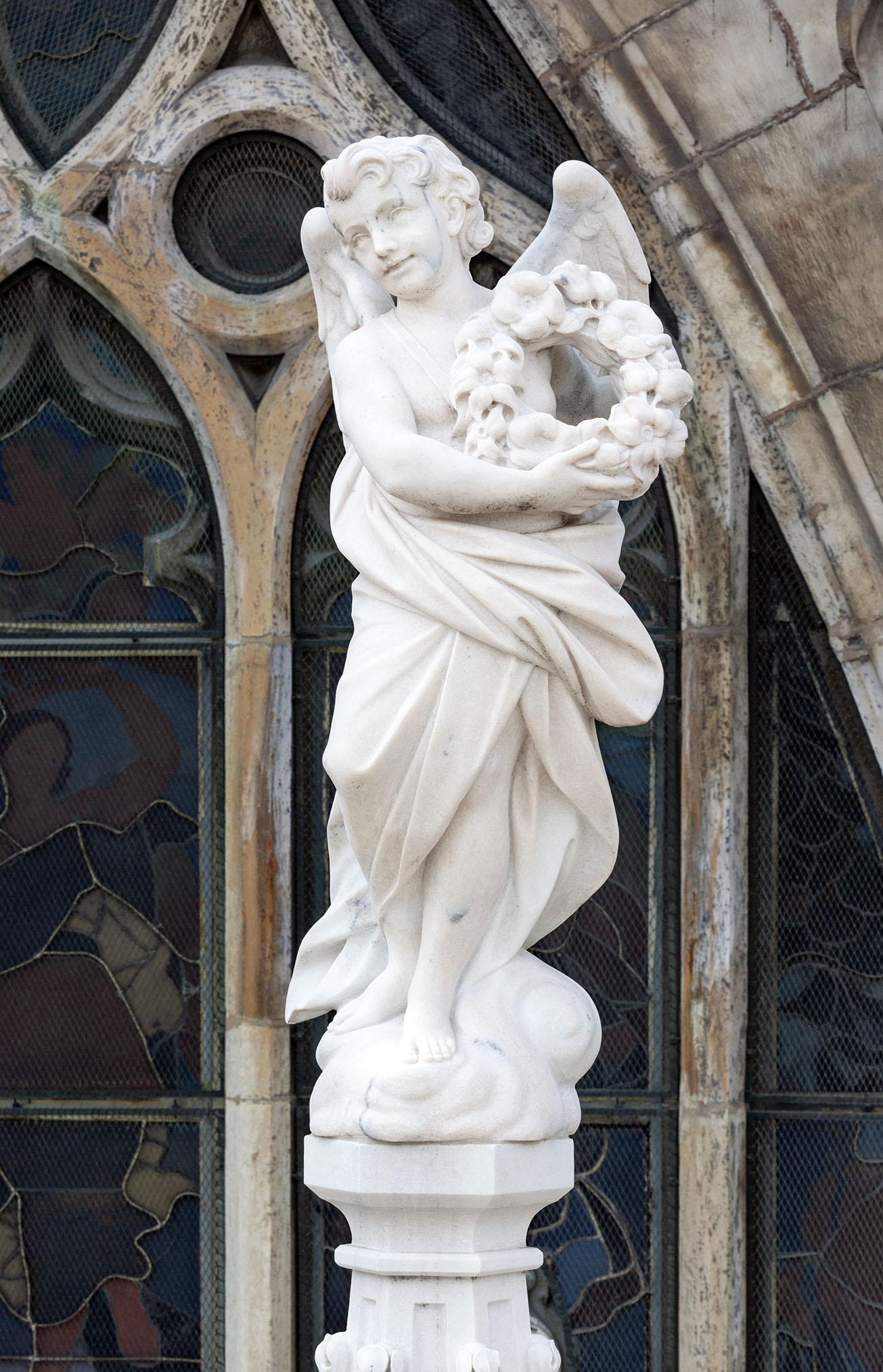
Etymology: the term derives from the Greek Ángelos (ἄγγελος), meaning “messenger.” In Italian, the word “angelo” has mantained this meaning and refers specifically to celestial beings who act as intermediaries between God and humanity.
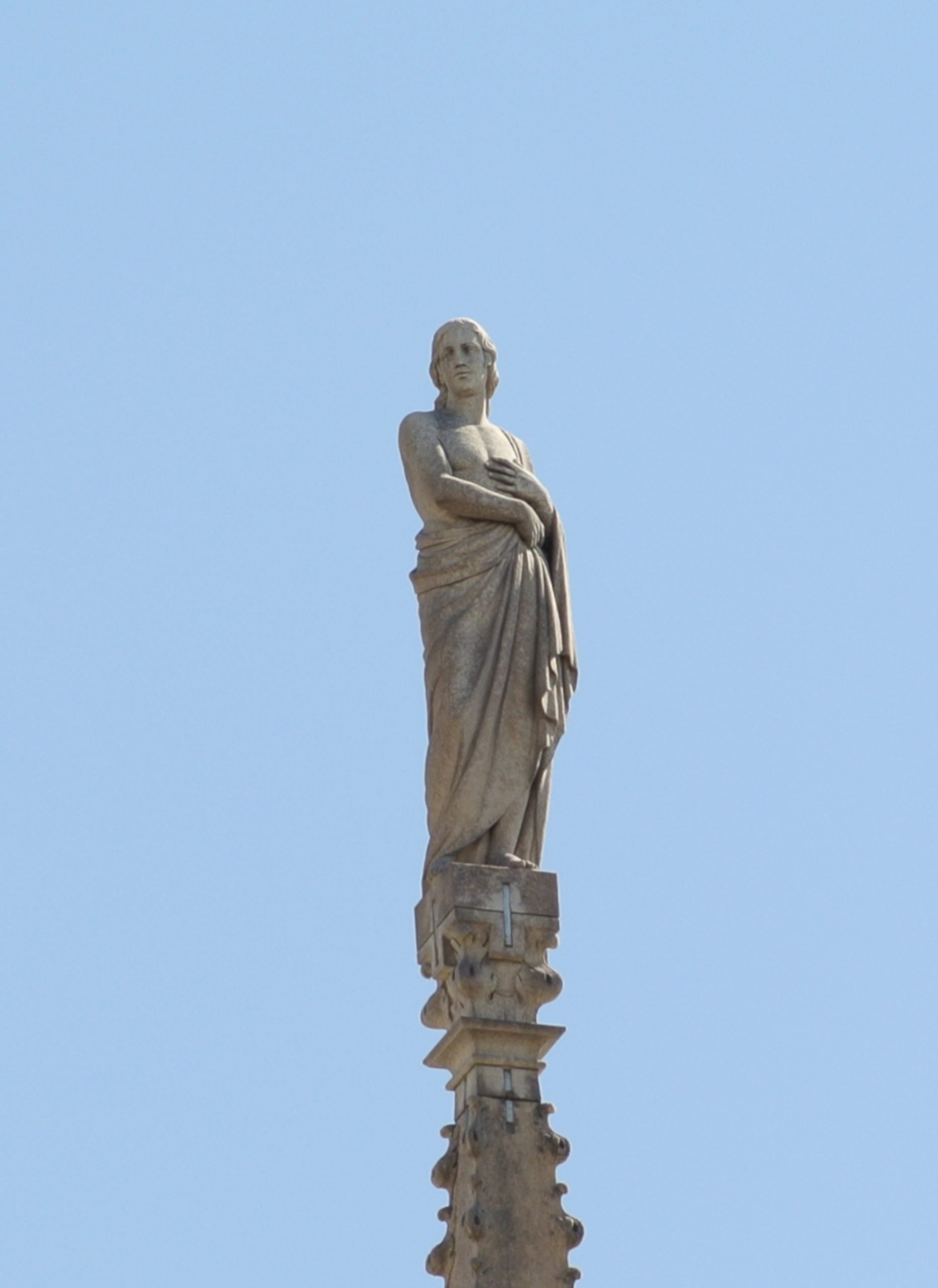
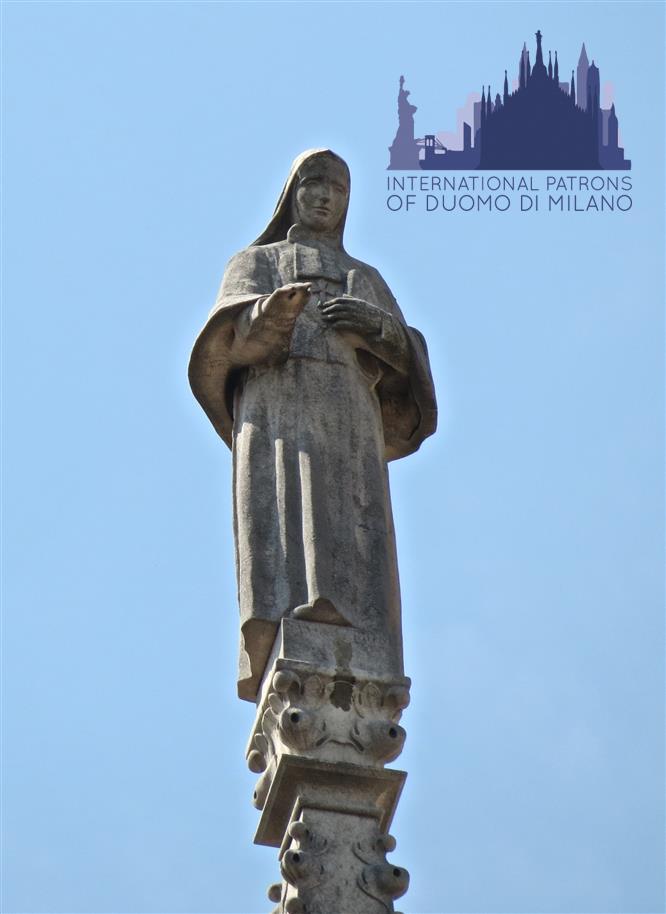
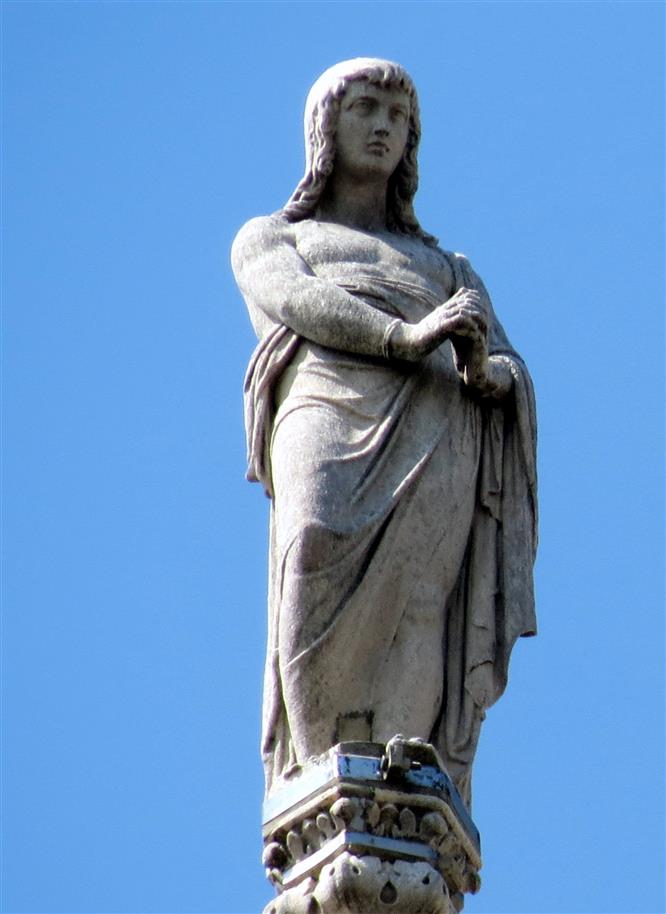
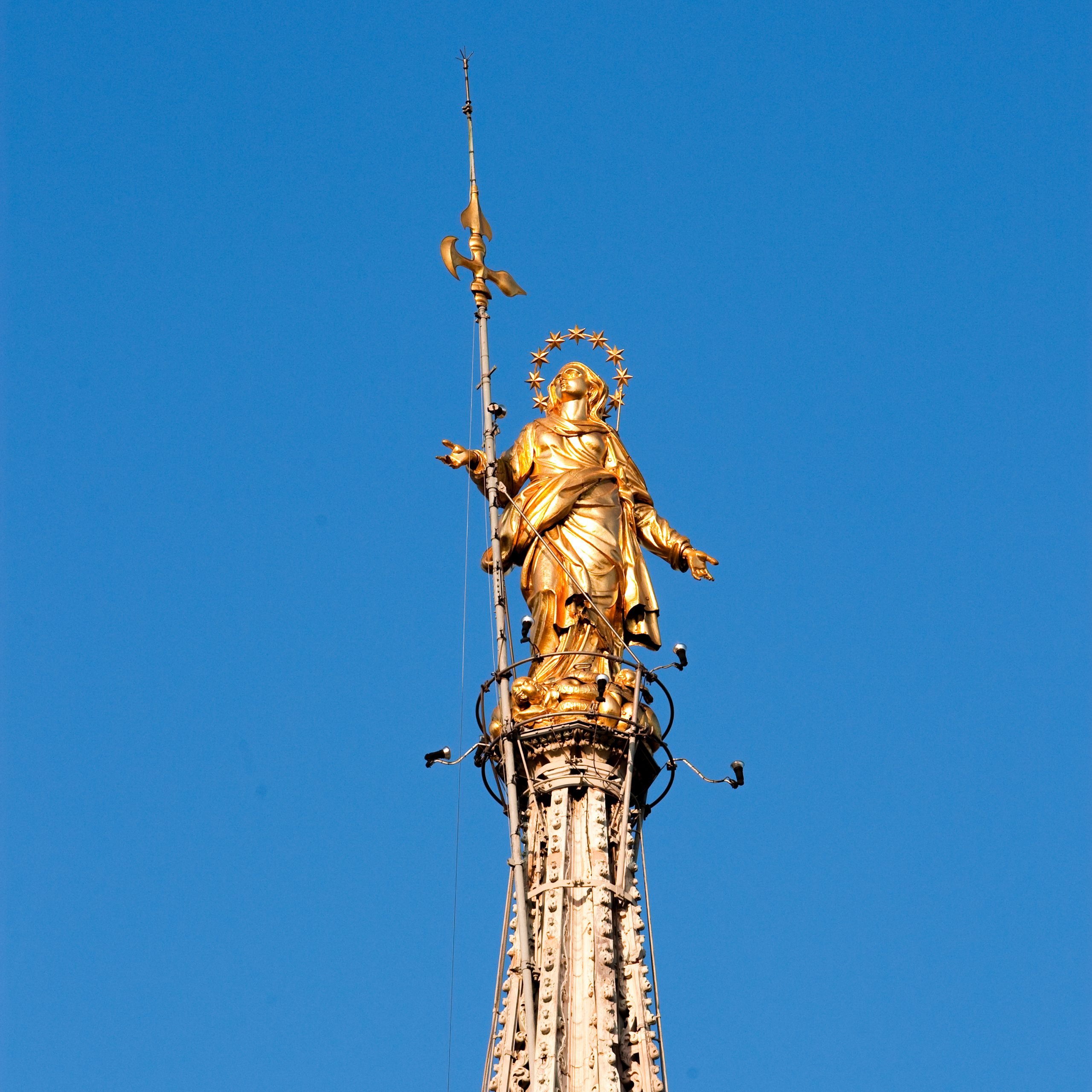
This angelic figure is characterized by a delicate iconography, being depicted as an angel “with a wreath of flowers.” The work conveys a sense of devotion through the symbolic offering of flowers, an element that softens the Gothic architecture of the Cathedral. The representation of an angel bearing a floral wreath is a recurring iconography in sacred art. It carries a profound meaning linked to the victory of the spirit over matter and the reward of eternal life. It evokes the “crown of life” or the “crown of glory” promised to the faithful, transforming the angel into a messenger of hope and divine triumph. Floral crowns are also a symbol of virginal purity, an element that places the figure in direct relationship with the Virgin Mary that crowns the Cathedral (the Main Spire).
The history of the statue in the Duomo’s construction site:
The history of this sculpture begins in the 18th century, when both the model and the original statue were created by Carlo Beretta in 1732. The supporting structure of the spire, known as the “piantato”, had been prepared earlier, around 1730, by the craftsmen working at the site at that time. Unlike other elements of the Cathedral, the sculpture visible today is not the original 18th-century work, but a copy. The reproduction was made in 2020 by the Franco Cervietti Workshop in Pietrasanta (Tuscany), thus preserving the visual integrity of the spire while ensuring the conservation of the historical artifact, which is now housed in the Marble Yard of the Veneranda Fabbrica.
 Tiburio