



 16 October
 North Transept Spire-G7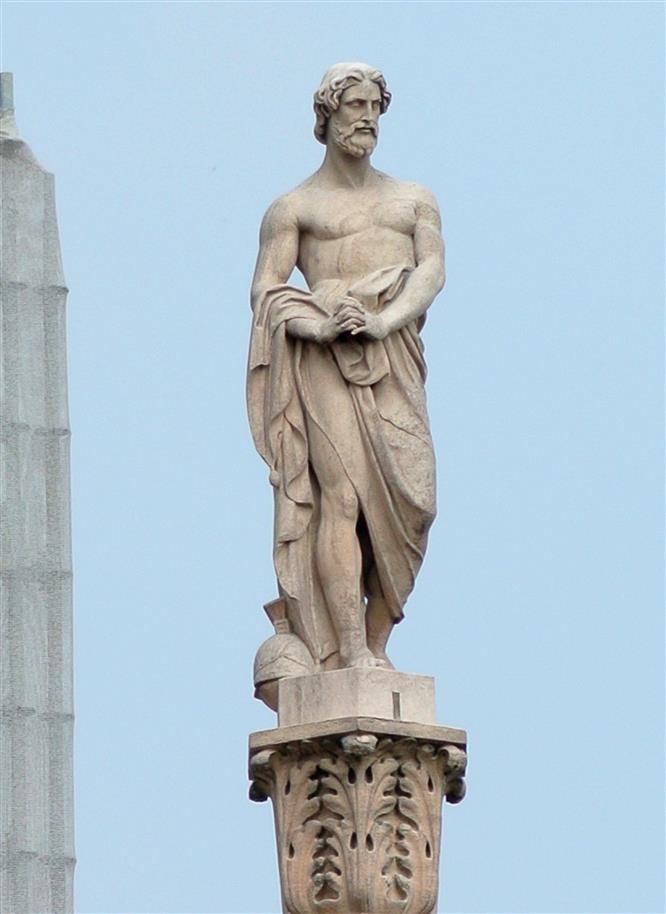
Feast day:
15th March – 16th october
Etymology:
The name Longinus derives from the Latin and is based on the adjective longus, meaning “long” or “tall.”
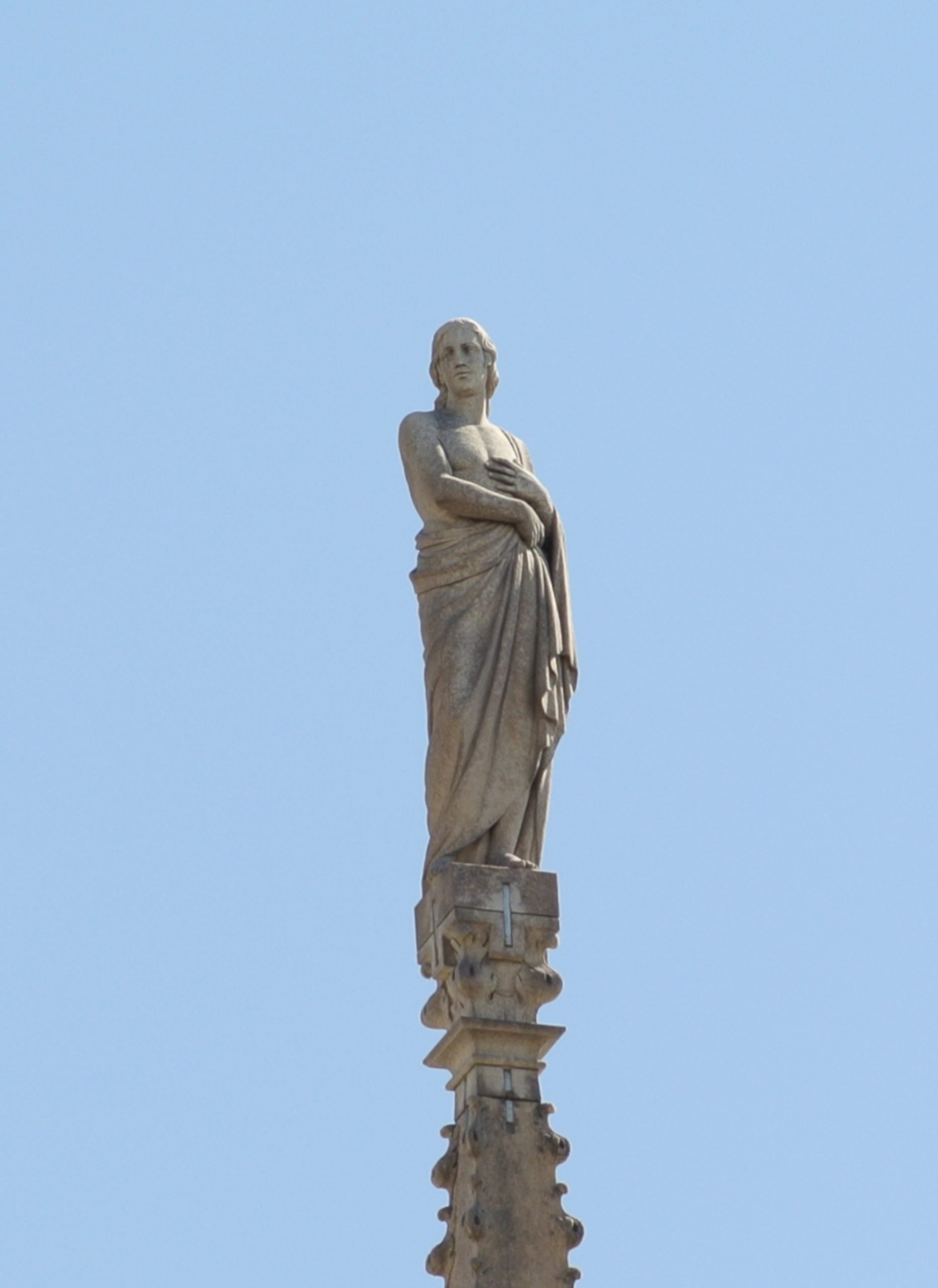
The statue at the top of Spire G7 depicts Gaius Cassius Longinus, soldier, martyr, and Saint. His story is about redemption and revelation: according to Christian tradition, Longinus is the Roman soldier who pierced Jesus’ side on the cross to confirm His death. Enlightened by Christ’s grace, he realized that the crucified man was truly the Son of God and exclaimed with conviction, “Truly this man was the Son of God!”- his was the only voice outside the chorus of noise and insults. In the Gospels he is referred to simply as a soldier, while in the apocryphal text Acts of Pilate he is identified by the name Longinus. Today he is venerated as a saint by both the Catholic and the Orthodox Churches. A medieval tradition recounts that the blood flowing from Christ’s side cured him of an eye disease, leading to his conversion. He died a martyr, beheaded at Caesarea in Cappadocia, where he is said to have been the first evangelizer. The Roman Martyrology commemorates him on October 16th, aligning with most Eastern Churches. In the Diocese of Mantua (Italy) his feast is celebrated on March 15th.
The history of the statue in the Duomo’s construction site:
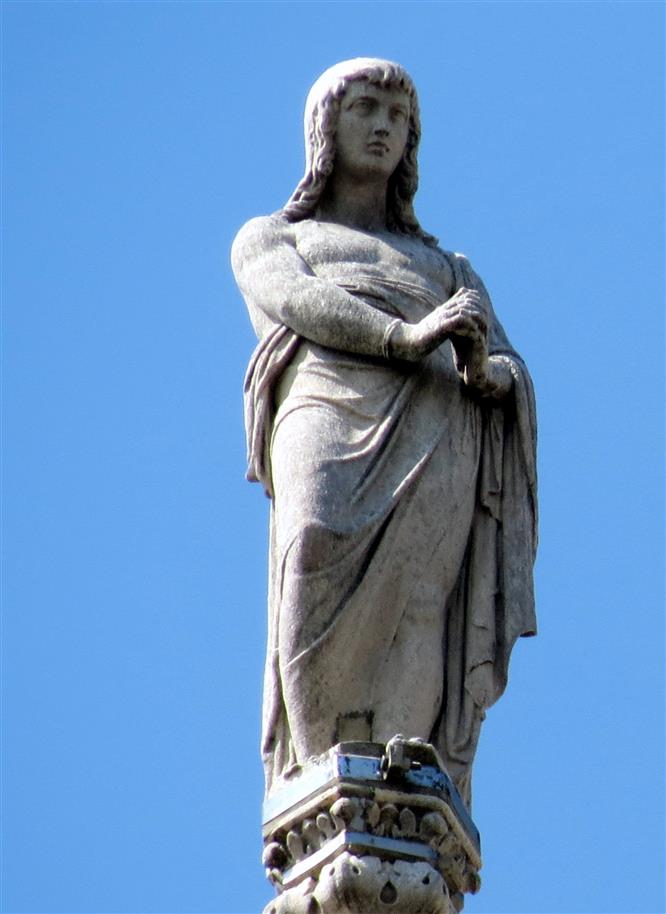
The statue of St. Longinus faces northeast and was originally created by the Varese-born sculptor Pompeo Marchesi. He produced both the plaster scale model—now preserved at the Duomo Museum in Milan—and the final marble version, completed in 1833. The original sculpture is currently housed in the marble yard of the Veneranda Fabbrica del Duomo, while a faithful copy made in 1956 has been placed at the top of Spire G7. Various archival documents attest that Pompeo Marchesi was the author of the original statue, such as the document in which the sculptor requests payment following the completion of the work, or the request for marble for the execution of the statue (which also includes confirmation that he created the model too)
 Tiburio