



 15 September
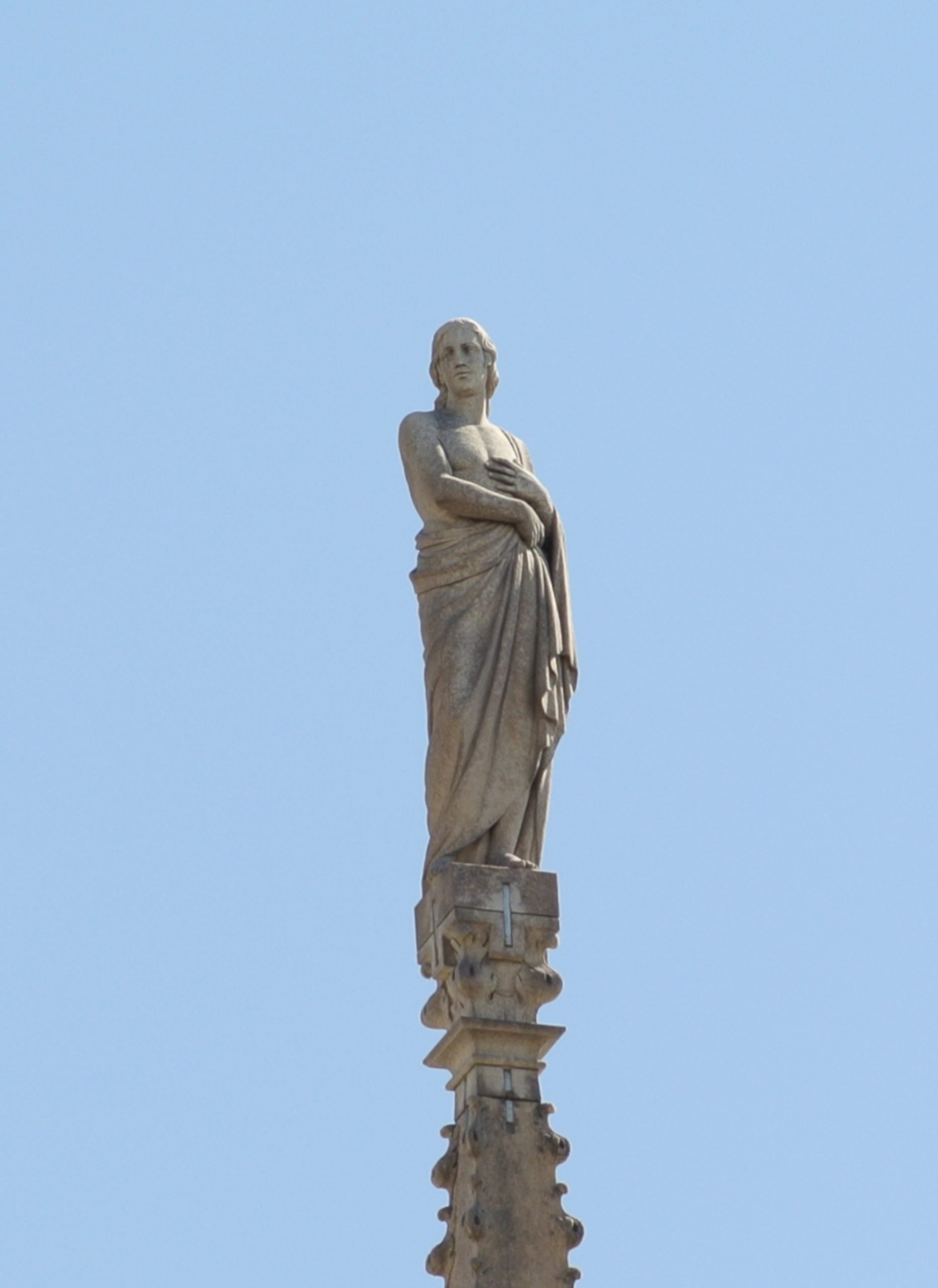
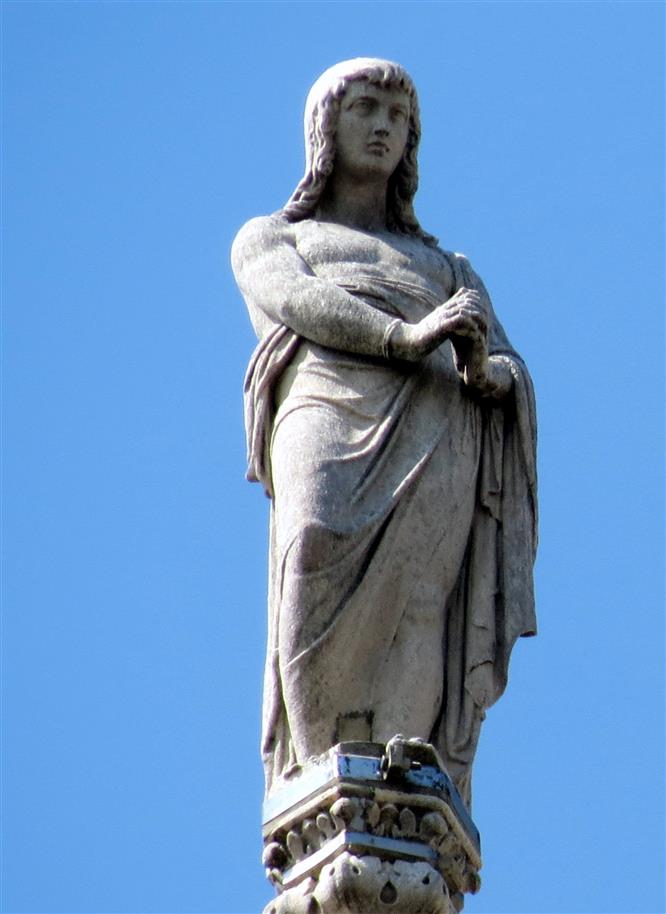
 South Transept Spire-G4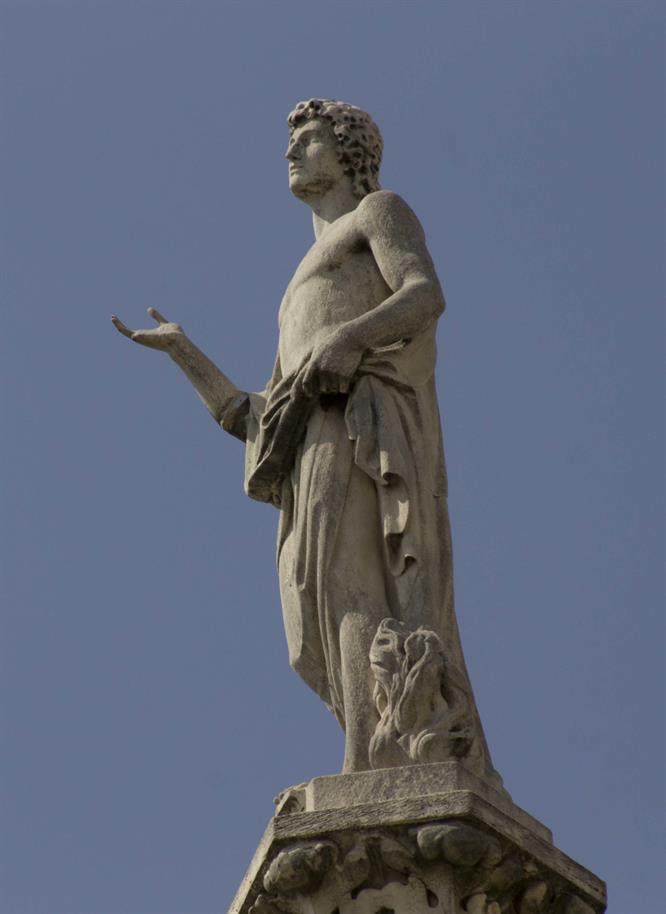
Etymology:
from the ancient Greek Μακρόβιος (Makrobios), composed of makros (“long”) and bios (“life”), the name Macrobio carries the beautiful auspicious meaning of “one who has a long life”.
Very little is known about St. Macrobius. He was certainly a native of Cappadocia who was captured and, together with a group of other Christians, was martyred in Tomi (Constanța in Scythia) under Emperor Licinius, co-ruler in the West from 308 to 313 A.D. . The Roman Martyrology commemorates St. Macrobius on September 15 (previously on the 13th).
The history of the statue in the Duomo’s construction site:
The St. Macrobius on spire G4 is most likely a twentieth-century reproduction. We know that the model for the original statue was conceived in the nineteenth century by the sculptor Grazioso Rusca, who died before he could begin working on it. For this reason, its execution was taken over by his son Gerolamo Rusca, also a sculptor, who completed it in 1829. In the list of statues to be executed in the years 1829/1830/1831, the statue is specifically referred to as “Macrobio of Cappadocia, burned.” Furthermore, according to certain archival documents, it appears that he was originally intended to crown one of the four Gugliotti of the Duomo, which are now occupied by other figures.
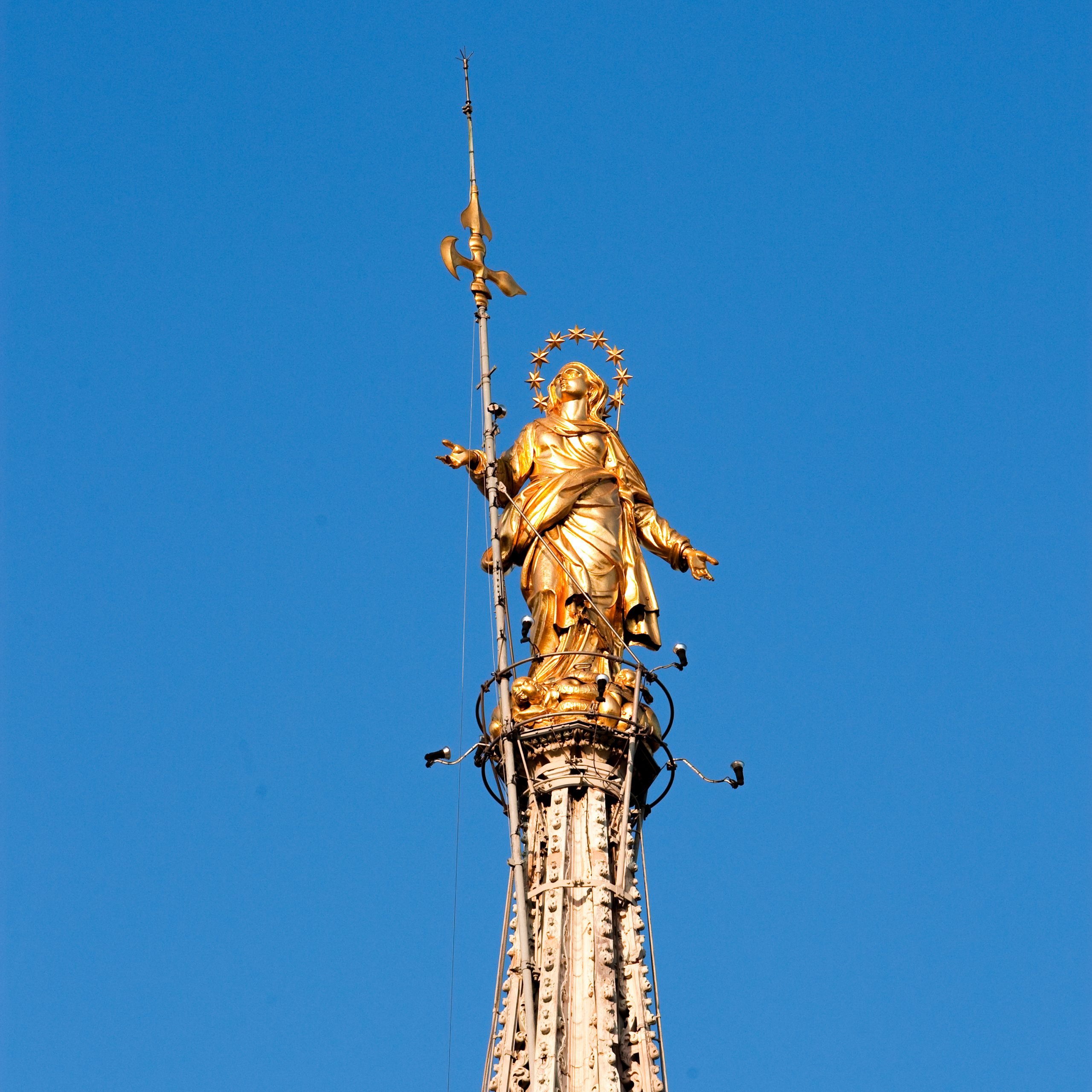
 Tiburio