



 03 February
 Facade spire-G13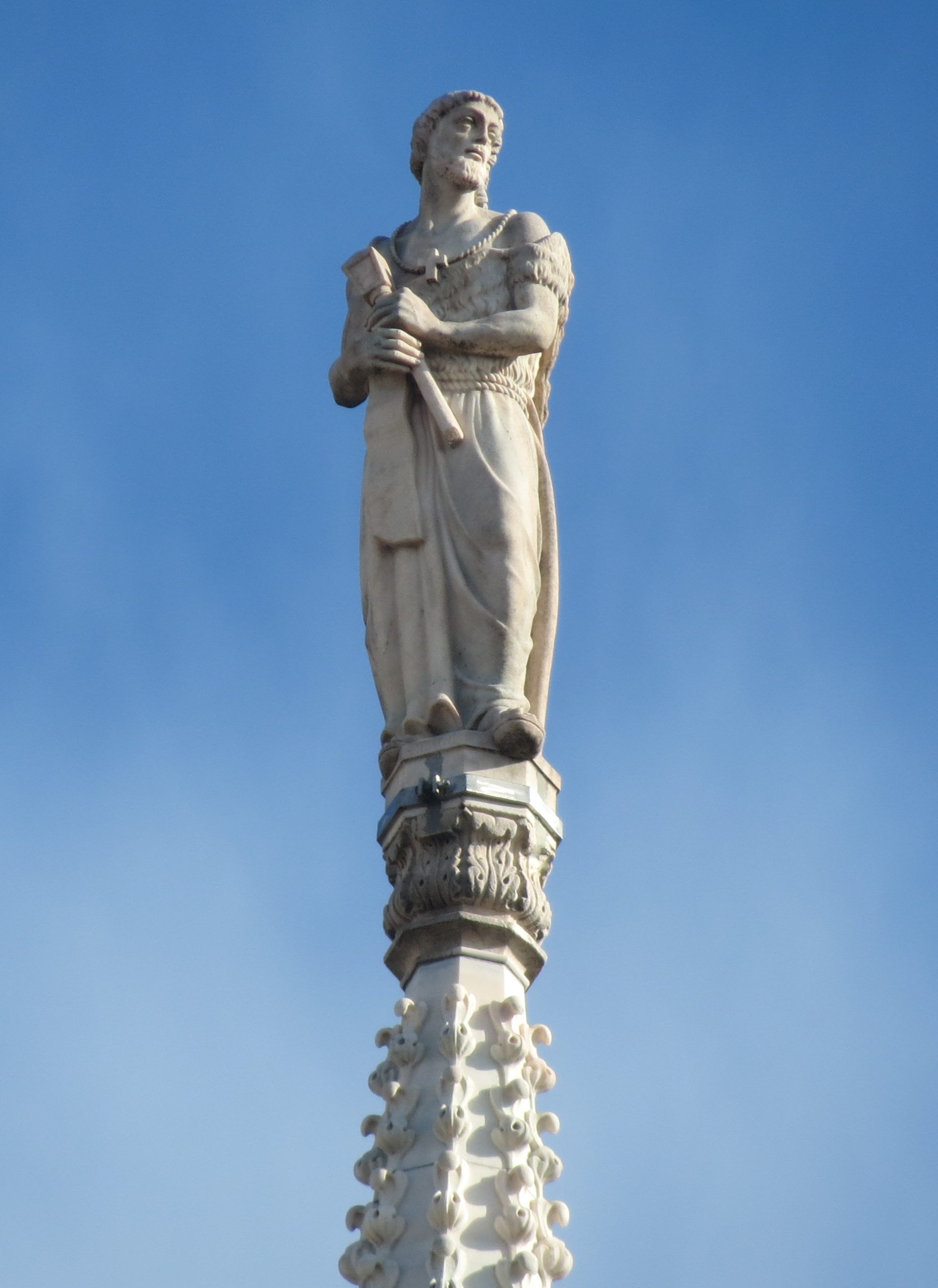
Etymology:
It derives from the Latin Blasius, which in turn comes from the Greek Blásios (Βλάσιος), and means “stammerer”.
Little information is known about St. Blaise’s life, but he is traditionally remembered as the bishop of the community of Sebaste in Armenia at the time of the Constantinian Pax. His martyrdom occurred around 316 and is linked to the conflicts between the West (Constantine) and the East (Licinius). When he was captured by the Romans, he was beaten and flayed alive with iron combs and then beheaded for refusing to renounce the Christian faith. His cult is widespread in both the Catholic and Orthodox Churches. During the 8th century, some Armenian faithful brought his relics to Maratea in Basilicata, a city of which he is the patron saint and where a Basilica was erected in his name. Saint Blaise is remembered for several miracles performed in his hometown, such as the healing of a boy who had a fishbone stuck in his trachea: even today he is invoked for throat ailments, and for this reason he is one of the helper saints to whom people turn in cases of specific illnesses. Saint Blaise is worshipped in many Italian cities and celebrated on February 3.
The history of the statue in the Duomo’s construction site:
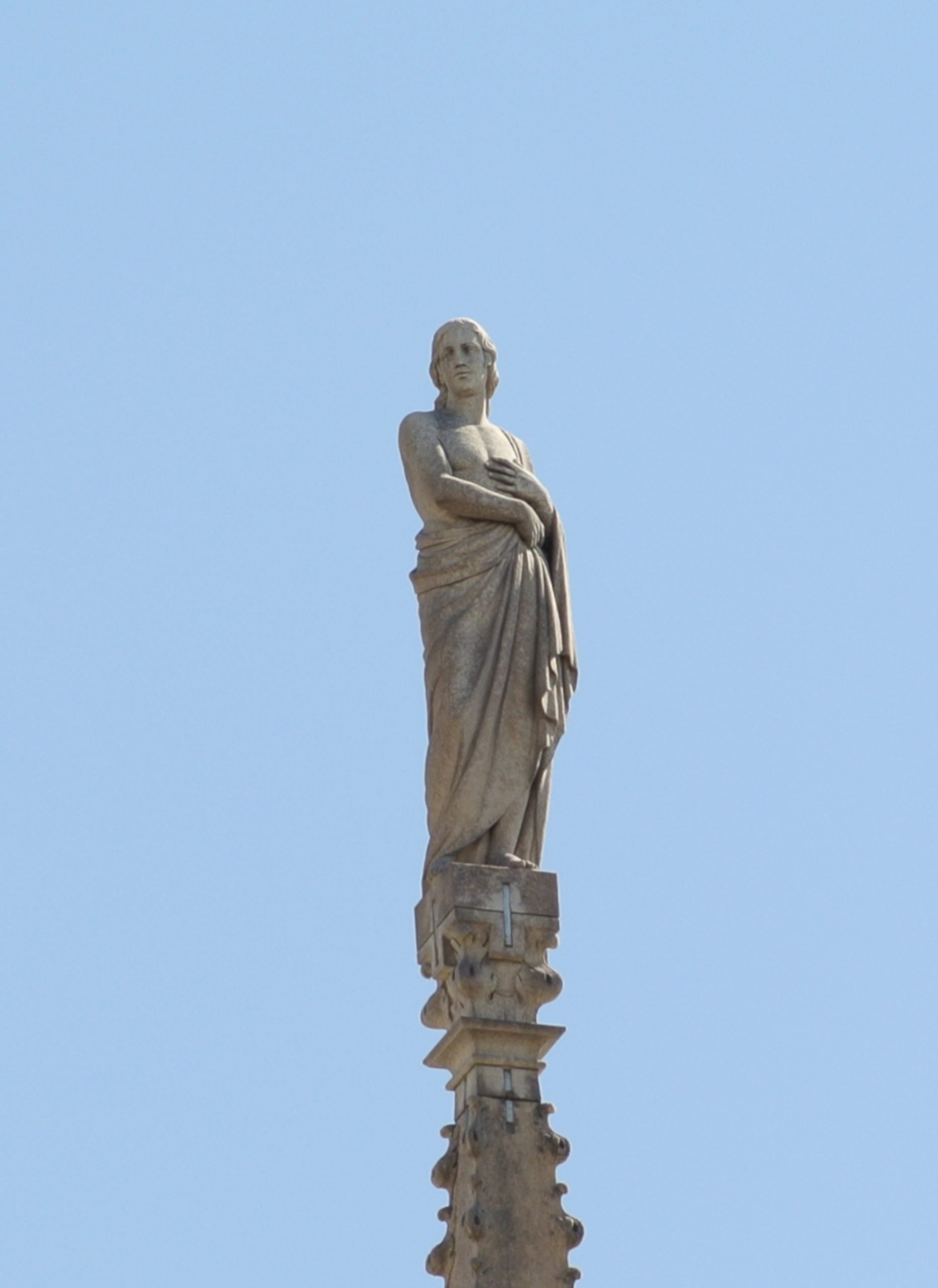
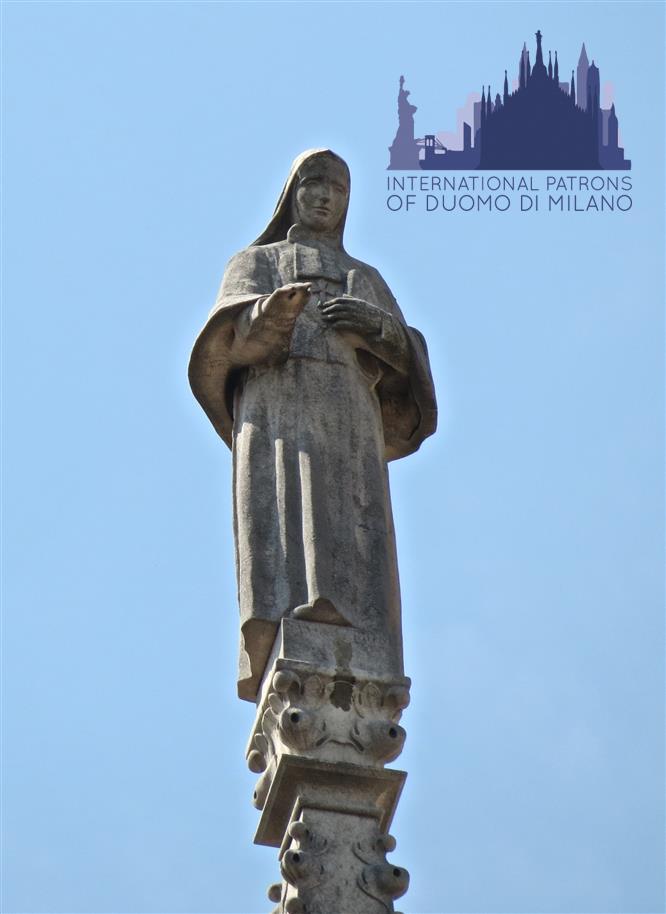
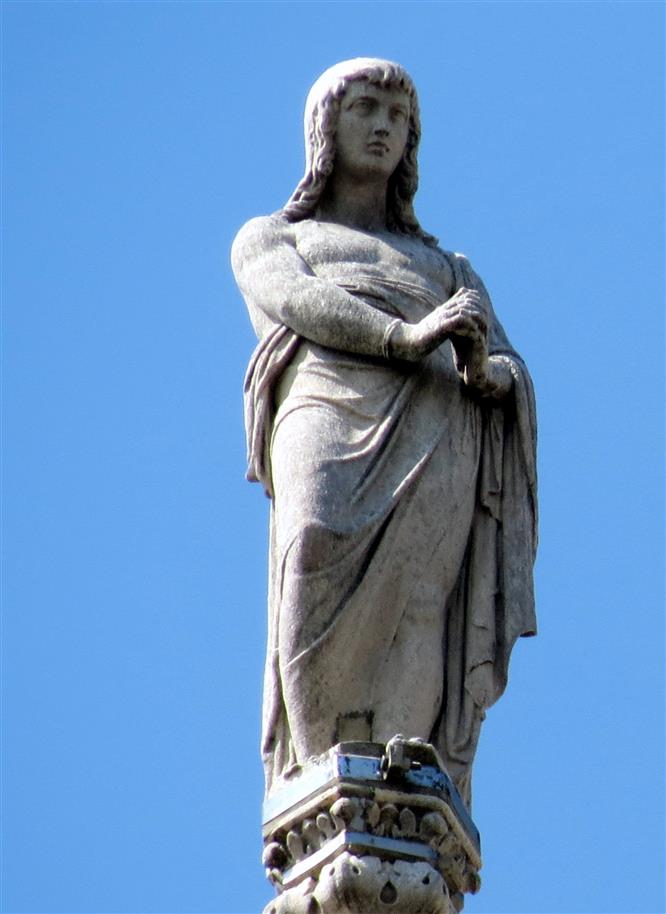
The Saint Blaise that now stands on spire G13 was created in 1962 by Aldo Andreani and it is part of the group of statues placed on the façade following the destruction caused by the 1943 bombings. At the base of the statue there is also an inscription confirming the identity of the saint, here depicted wearing a long drapery and, over his garment, an animal-skin cloak. A cross is visible around his neck, and in his hands he holds an object that may be identified as a torch, one of his distinguishing attributes.

 Tiburio